







Every premature baby deserves a healthy start in life, and that includes healthy eyes. Retinopathy of Prematurity affects the retina of babies born too early, and without timely detection, it can lead to permanent vision loss. In India, around 30 to 40 percent of premature babies admitted to the NICU show some signs of this condition. Families across Madhya Pradesh are now seeking ROP eye treatment in Indore because early detection truly saves sight.
This guide is written for parents, caregivers, and families who want to understand which babies need screening, at what age it should be done, and what to expect from the process.
What Is Retinopathy of Prematurity?
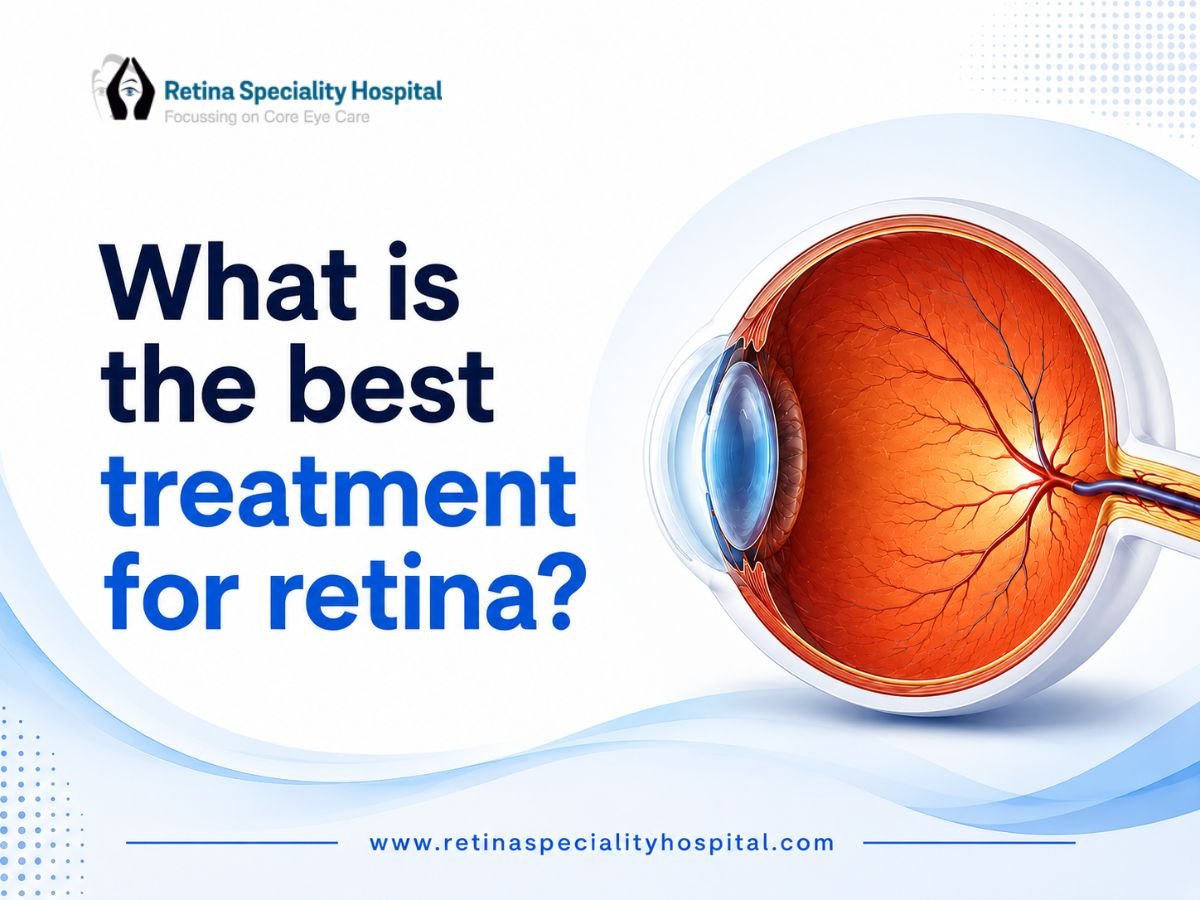
The retina is a thin layer at the back of the eye that captures light and sends signals to the brain. In a baby born at full term, the blood vessels of the retina finish growing inside the womb.
In a premature baby, this growth is not complete at birth. After birth, the blood vessels can start growing in the wrong direction. They may become twisted, leak fluid, or even pull the retina away from the eye wall.
This is called Retinopathy of Prematurity. If it is not caught in time through a proper neonatal retinal evaluation, it can progress to blindness. The good news is that it is detectable through a routine eye examination.
Which Babies Are at Risk of ROP?
Not all premature babies develop ROP. However, the earlier a baby is born and the lower the birth weight, the higher the risk. Doctors follow established ROP screening guidelines for newborns to decide which babies need examination.
Babies who must be screened include:
- Babies born before 32 weeks of pregnancy
- Babies with a birth weight below 1500 grams
- Babies born between 32 and 36 weeks who needed oxygen for a long time
- Babies who were on a ventilator or had breathing difficulties
- Babies admitted to the NICU with serious illness or infection
- Twins or multiple births that were premature
A baby may look completely well from the outside, but the retina can still be affected. This is why eye screening for premature infants must never be skipped based on appearance alone.
ROP Screening Schedule Based on Risk Level
The timing of the first screening depends on how early the baby was born. This table gives a simple overview:
| Risk Level | Birth Weight | Gestational Age at Birth | First Screening |
| Very High Risk | Below 1200g | Below 28 weeks | At 4 weeks of age |
| High Risk | 1200g to 1500g | 28 to 32 weeks | At 4 to 6 weeks of age |
| Moderate Risk | 1500g to 2000g | 32 to 36 weeks | At 6 weeks or as advised |
| Clinically Unstable | Any weight | Any gestation | As per doctor’s advice |
Follow-up visits are scheduled based on what the doctor finds in the first examination. Some babies are seen every week, while others are reviewed every two weeks.
At What Age Should ROP Screening Be Done?
The recommended age for ROP screening in preterm infants is between 4 and 6 weeks after birth. However, the starting point also depends on corrected gestational age.
Corrected gestational age is counted from the original due date. For example, a baby born at 28 weeks who is now 4 weeks old has a corrected age of 32 weeks. This number helps the doctor decide when the retina is at the highest risk.
Here is a simple breakdown:
- Babies born at or before 27 weeks: First examination at 4 weeks of actual age or 31 weeks corrected age, whichever comes first
- Babies born between 28 and 32 weeks: First examination between 4 and 6 weeks of age
- Babies born after 32 weeks with health problems: Timing as advised by the treating doctor
The doctor will never give a fixed date without reviewing the baby’s condition. Each case is different, and the schedule is planned accordingly.
When Does ROP Develop and When Does the Risk End?
ROP is most active during a specific window. It most commonly develops between 32 and 44 weeks of corrected gestational age. This is when the retinal blood vessels are still growing and are most likely to go off course.
After 45 weeks of corrected gestational age, the risk drops significantly. By this time, the blood vessels have usually completed their growth and reached the outer edges of the retina without any problems.
However, a baby is only declared safe from ROP after the retina specialist confirms full and normal vessel growth. Parents should not assume the risk is over without a doctor’s confirmation.
Signs That Should Prompt an Immediate Eye Check
ROP in early stages has no visible symptoms. Parents cannot detect it by looking at the baby’s eyes. Only a trained eye specialist in Indore with proper instruments can examine the retina clearly.
That said, there are general eye warning signs in newborns that should never be ignored:
- No response to light or no blinking when a bright light is shown
- A white or cloudy appearance inside one or both eyes
- Eyes that are crossed or not moving together
- No tracking of faces or moving objects after the first few weeks
- Rapid or uncontrolled eye movements
- One pupil appearing much larger than the other
- Redness, swelling, or discharge from the eyes
If any of these signs are noticed, visit an eye doctor in Indore right away. Do not wait for a scheduled appointment.
What Happens During the ROP Screening Test?
The ROP screening test is done by a retina specialist or ophthalmologist trained in examining premature babies. The examination itself is not painful, though the baby may be uncomfortable during the process.
Here is what the examination involves:
- Special eye drops are placed in the baby’s eyes to widen the pupils
- The doctor waits 30 to 45 minutes for the drops to take full effect
- A small handheld instrument is used to look inside the eye and examine the retina
- The full examination is usually completed in 5 to 10 minutes
- The baby may cry or be unsettled for a short while but settles quickly
The best ROP screening hospital in Indore will have a dedicated team for this. Parents are encouraged to stay close and comfort the baby before and after the examination.
Understanding the Five Stages of ROP
ROP is graded from Stage 1 to Stage 5 based on how far the condition has progressed. Knowing the stages helps parents understand what the doctor means when sharing results.
- Stage 1: Very mild, blood vessels grow slightly abnormally, often heals on its own
- Stage 2: Moderate change, no immediate concern but regular monitoring is needed
- Stage 3: Abnormal blood vessel growth moves toward the centre of the eye
- Stage 4: The retina begins to peel away partially from the eye wall
- Stage 5: Complete detachment of the retina, very high chance of vision loss
Plus disease is an additional finding that can occur alongside any stage. It means the blood vessels have become wider and twisted, which suggests the condition is worsening quickly. When Plus disease is present, the situation is considered more serious.
Why Families Choose ROP Eye Treatment in Indore
Indore is one of the most important cities in central India for medical care. Families from across Madhya Pradesh and neighbouring states come here for quality eye treatment in Indore because the city has experienced retina specialists and well-equipped hospitals.
For premature babies, NICU care and NICU baby eye care go hand in hand. A good eye hospital in Indore will have a protocol in place to screen all at-risk babies before they are discharged. Some hospitals even have a dedicated retina unit within the NICU facility.
Choosing the right best eye specialist in Indore means finding a doctor who has experience specifically with premature infants, not just general eye patients. Retinopathy of prematurity diagnosis requires skill, the right equipment, and a careful approach to examining a very small and fragile eye.
Case Study:
A young couple from Dewas brought their premature son to a retina specialist in Indore after being referred by the NICU team. The baby had been born at 29 weeks and had spent the first three weeks in the NICU on oxygen support.
At exactly 4 weeks of age, the first ROP screening test was performed. The specialist found Stage 3 ROP in the right eye and Stage 2 in the left eye. Both eyes showed early signs of Plus disease.
The family was counselled about the condition. Weekly follow-up visits were scheduled. The doctor monitored the progression closely and over the following weeks, the condition in the left eye resolved naturally. The right eye was also observed carefully and stabilized without further progression.
By the time the baby was 3 months old, both eyes showed normal retinal vessel growth. At his one-year developmental check, he responded normally to visual stimulation and showed age-appropriate eye contact and tracking.
The parents later said that they had no idea such a condition even existed until the NICU team told them. They were grateful that the referral was made on time and that they did not delay the visit.
This case shows that ROP screening in Indore works when it is done at the right time. A baby born at 29 weeks with Stage 3 ROP had a good outcome simply because the examination happened when it was supposed to.
FAQ’s About ROP Eye Treatment in Indore
1. Which infants should be screened for ROP?
Premature babies, low birth weight babies, and infants who needed oxygen support after birth should undergo ROP screening to detect retinal problems early and prevent vision loss.
2. When is ROP screening required?
ROP screening is usually required 3–4 weeks after birth for premature babies. Early screening helps doctors identify retinal changes and start treatment if necessary.
3. What age is ROP set in?
ROP generally begins developing within the first few weeks after birth, especially in premature infants whose retinal blood vessels are still growing and maturing.
4. At what age is ROP most likely to develop?
ROP is most likely to develop between 4 and 8 weeks after birth in premature babies. Regular eye examinations during this period are very important.
5. When is ROP no longer a risk?
ROP is usually no longer a risk once the retina has fully developed and eye specialists confirm normal retinal growth during follow-up examinations.
6. What are the 7 danger signs in a newborn baby?
Poor feeding, breathing difficulty, fever, low temperature, yellow skin, seizures, excessive sleepiness, and reduced movement are important warning signs requiring immediate medical attention.
7. What is the hardest month of the baby’s first year?
Many parents find the first month the hardest due to frequent feeding, sleep disturbances, adjustment challenges, and understanding the baby’s needs and routines.
8. When to worry about a newborn baby?
Seek medical help if a newborn has breathing problems, poor feeding, fever, unusual crying, extreme sleepiness, seizures, or signs of dehydration.
9. What are early warning signs?
Early warning signs include poor weight gain, feeding difficulties, breathing issues, unusual eye movements, excessive sleepiness, fever, or lack of normal activity.
Conclusion
Caring for a premature baby is not easy. There are many things to watch, many appointments to keep, and many worries along the way. Among all the care a premature baby needs, eye health often gets overlooked because the baby looks fine on the outside.
Retinopathy of Prematurity screening is not optional for high-risk babies. It is a standard part of premature baby care, and it exists for a very good reason. The retina develops during a short window, and problems that begin during that window can be addressed only if they are found in time.
Families in central India now have access to skilled retina care through ROP eye treatment in Indore. Whether your baby was born at 28 weeks or 34 weeks with complications, a proper eye examination by an experienced eye specialist in Indore can give you clarity and peace of mind.
Do not wait for symptoms to appear. Book the screening when your NICU team advises it, show up for every follow-up, and ask questions if anything is unclear. Your baby’s vision is worth protecting from the very first weeks of life.