








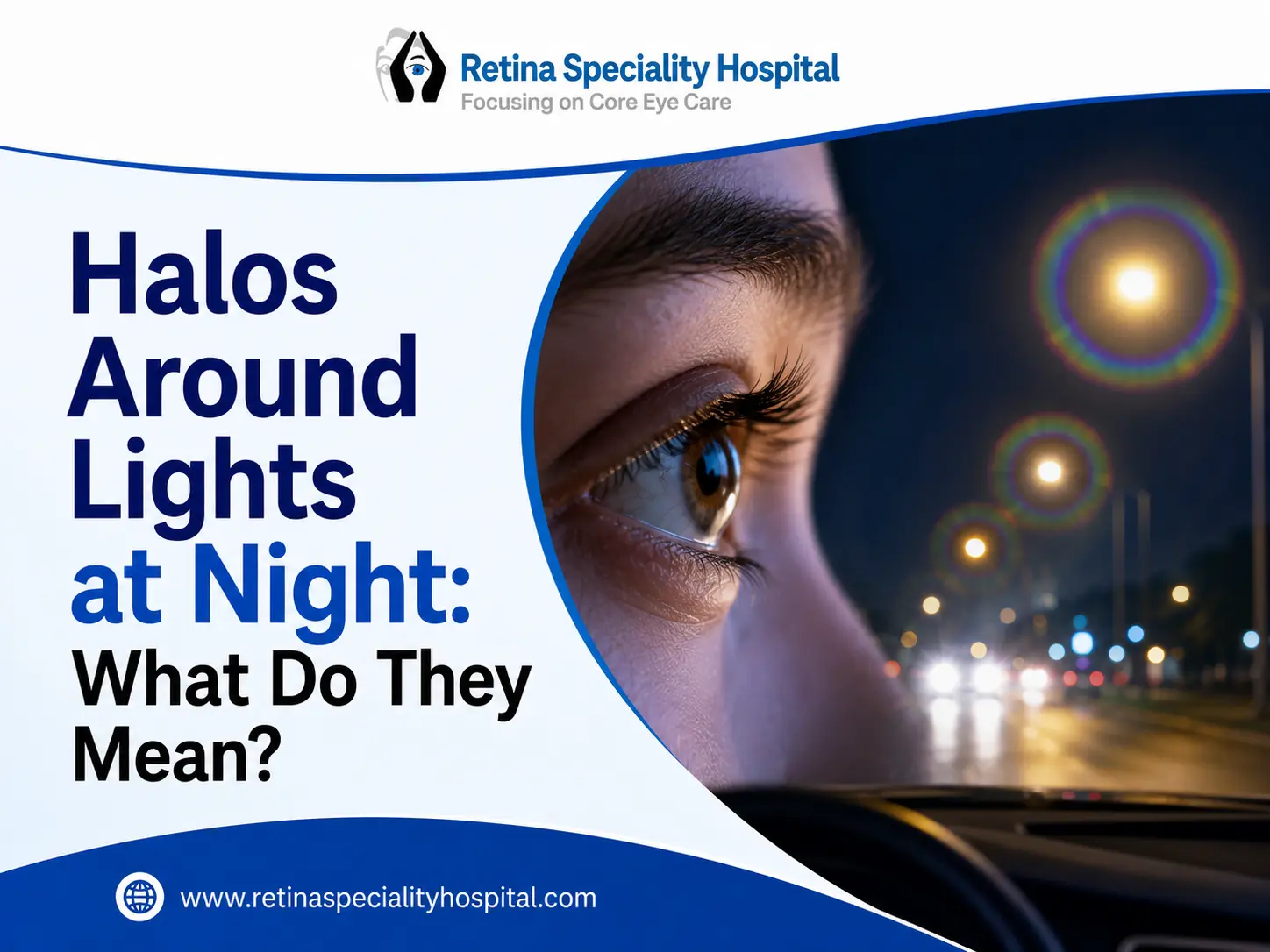
Have you ever noticed glowing circles or bright rings surrounding headlights, streetlights, or other light sources after dark? If so, you may have wondered whether this is a normal part of aging or a sign of an eye problem. Halos Around Lights at Night are a common visual symptom that can occur for several reasons, ranging from temporary eye dryness to more serious eye conditions that require prompt medical attention.
Although occasional halos may not always indicate a serious problem, persistent or worsening symptoms should never be ignored. In some cases, they may be an early warning sign of cataracts, glaucoma, corneal disorders, or retinal conditions. Understanding what causes halos, how they are diagnosed, and when to seek professional care can help protect your vision and maintain your eye health.
What Are Halos Around Lights at Night?
Halos Around Lights at Night are bright circles or rings that appear around light sources, particularly in dim or dark environments. They may be white, yellow, or rainbow-colored and are often more noticeable while driving at night.
Many people describe halos as making lights appear larger or surrounded by a glowing ring. Depending on the underlying cause, the symptom may affect one eye or both eyes and may occur occasionally or continuously.
Why Do Halos Around Lights at Night Occur?
For clear vision, light entering the eye must pass smoothly through the cornea, lens, and other structures before reaching the retina. When light is scattered because of changes in these structures, halos may become visible.
Several eye conditions can interfere with the normal focusing of light, causing nighttime glare and halos.
Common Causes of Halos Around Lights at Night
Cataracts
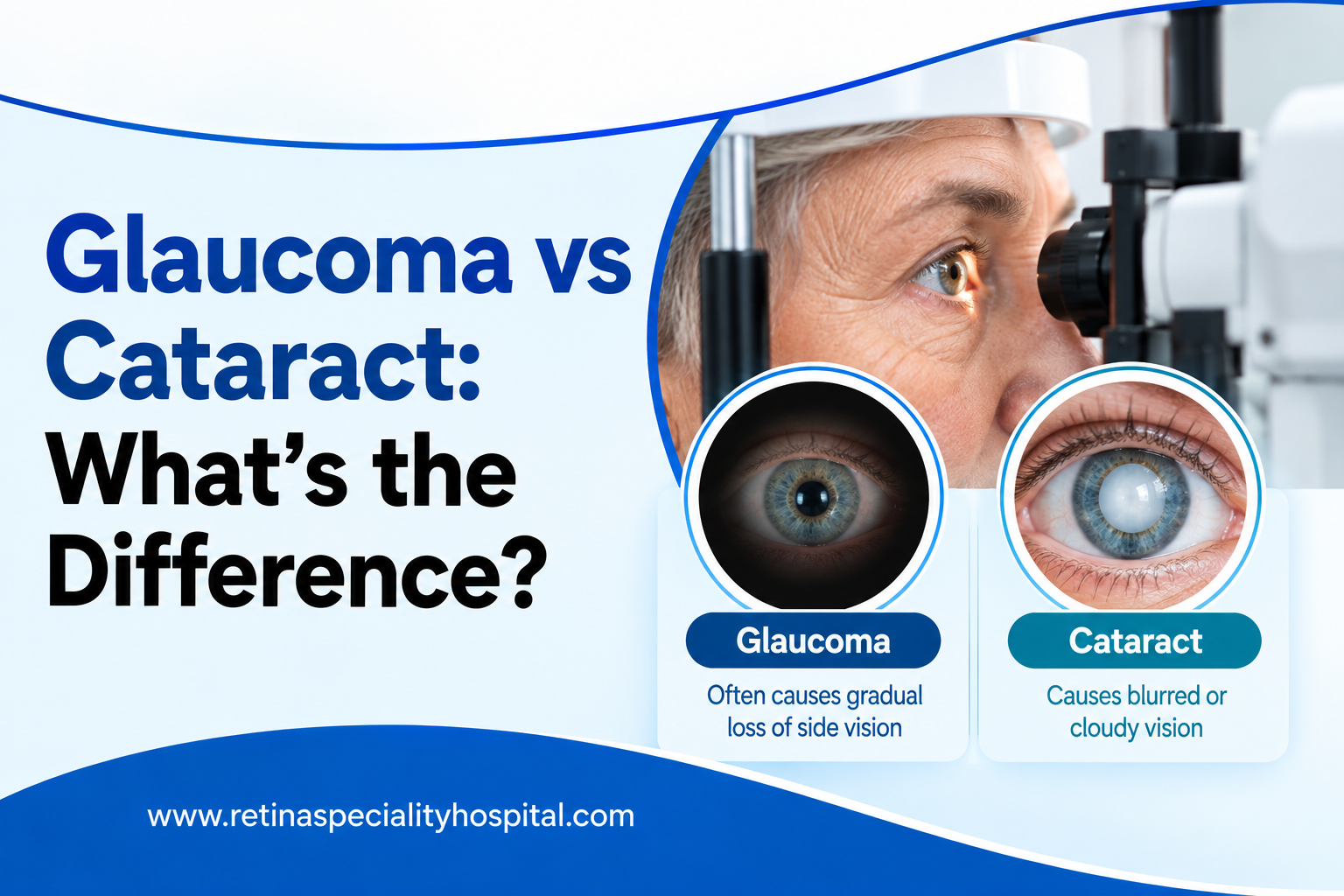
Cataracts are among the most common causes of halos, especially in older adults. As the natural lens becomes cloudy, incoming light scatters instead of focusing properly on the retina.
Patients with cataracts often notice:
- Blurred vision
- Increased glare
- Difficulty driving at night
- Reduced contrast sensitivity
- Halos around headlights
Dry Eye Syndrome
An unstable tear film affects the smooth optical surface of the eye.
Dry eyes may cause:
- Temporary halos
- Blurred vision
- Burning sensation
- Foreign body sensation
- Fluctuating vision
Fortunately, symptoms often improve with appropriate dry eye treatment.
Refractive Errors
Uncorrected vision problems such as astigmatism or high refractive errors can scatter light entering the eye.
Updating your glasses or contact lens prescription often improves nighttime visual quality.
Corneal Disorders
The cornea provides much of the eye’s focusing power.
Conditions affecting the cornea include:
- Keratoconus
- Corneal swelling
- Corneal scars
- Corneal infections
These disorders can produce halos, glare, blurred vision, and distorted images.
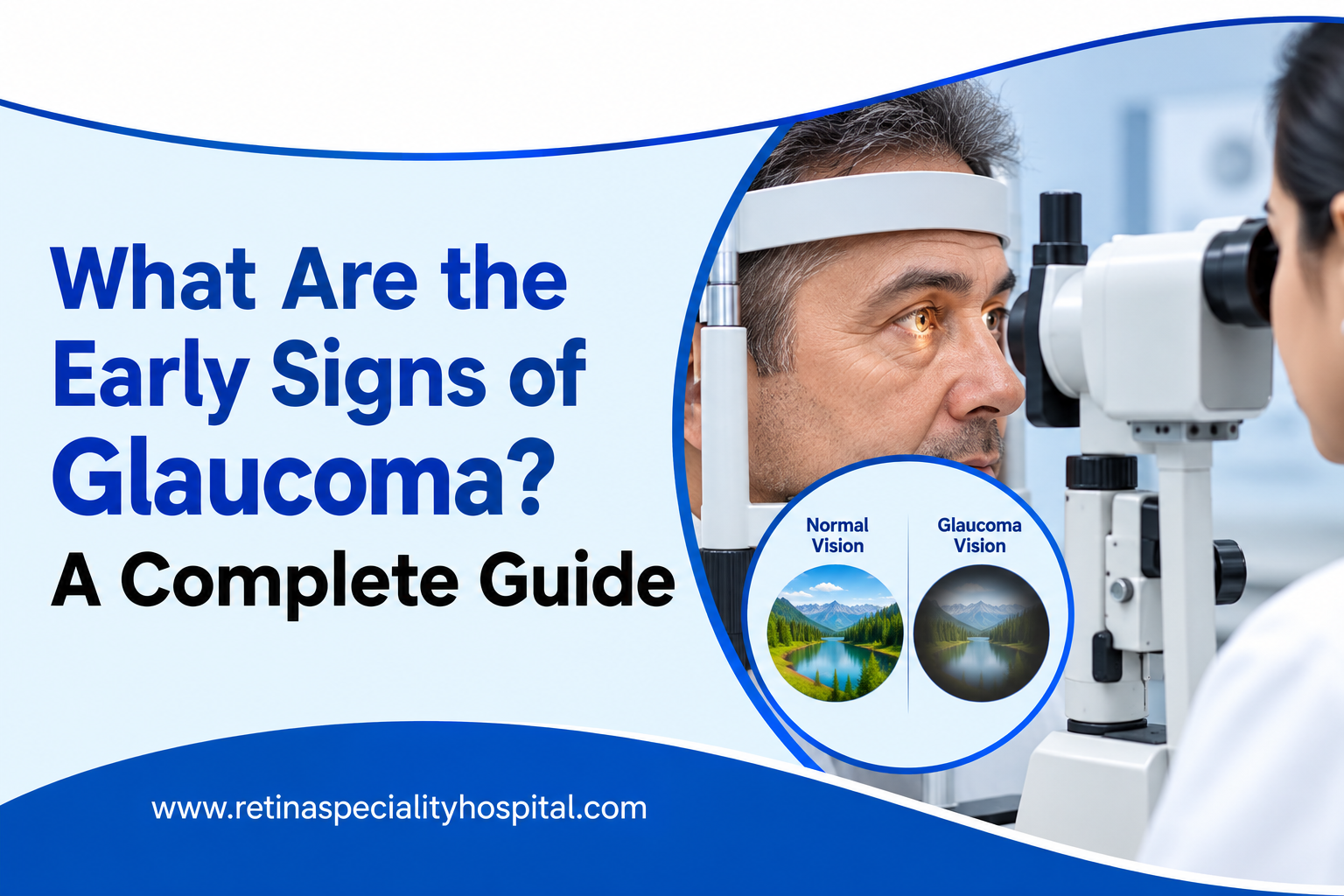
Glaucoma
Acute angle-closure glaucoma is a medical emergency that may cause:
- Sudden halos around lights
- Severe eye pain
- Red eye
- Blurred vision
- Nausea
- Vomiting
- Headache
Anyone experiencing these symptoms should seek emergency medical attention immediately.
Post Eye Surgery Changes
Some patients notice temporary halos after procedures such as cataract surgery or laser vision correction.
In most cases, these symptoms gradually improve as healing progresses.
Can Retinal Problems Cause Halos Around Lights?
Retinal diseases are less commonly associated with halos than corneal or lens disorders. However, certain retinal conditions may produce visual disturbances that patients sometimes describe as glare or abnormal light perception.
Individuals experiencing halos along with symptoms such as:
- Flashes of light
- Floaters
- Distorted central vision
- Sudden vision loss
should undergo a comprehensive retinal examination. In these situations, timely Retina treatment in Indore may help preserve vision and prevent further complications.
Consulting Top retina specialists in Indore ensures accurate diagnosis if retinal disease is suspected.
Symptoms That May Accompany Halos Around Lights at Night
Depending on the underlying cause, halos may occur alongside other symptoms.
These include:
- Blurred vision
- Double vision
- Increased glare
- Eye pain
- Redness
- Excessive tearing
- Headaches
- Difficulty driving at night
- Reduced night vision
- Sensitivity to bright lights
The combination of symptoms often helps ophthalmologists determine the underlying diagnosis.
When Are Halos Around Lights at Night an Emergency?
Although many causes are not urgent, some situations require immediate evaluation.
Seek emergency medical attention if halos are accompanied by:
- Severe eye pain
- Sudden vision loss
- Nausea or vomiting
- Red eye
- Sudden headache
- Rapid decrease in vision
- Eye injury
- Sudden flashes and floaters
These symptoms may indicate acute glaucoma or another serious eye condition requiring immediate treatment.
Prompt evaluation by an experienced eye doctor in Indore is essential to protect vision.
How Are Halos Around Lights at Night Diagnosed?
A comprehensive eye examination helps determine the exact cause.
Your ophthalmologist may perform:
- Visual acuity testing
- Refraction
- Slit-lamp examination
- Corneal evaluation
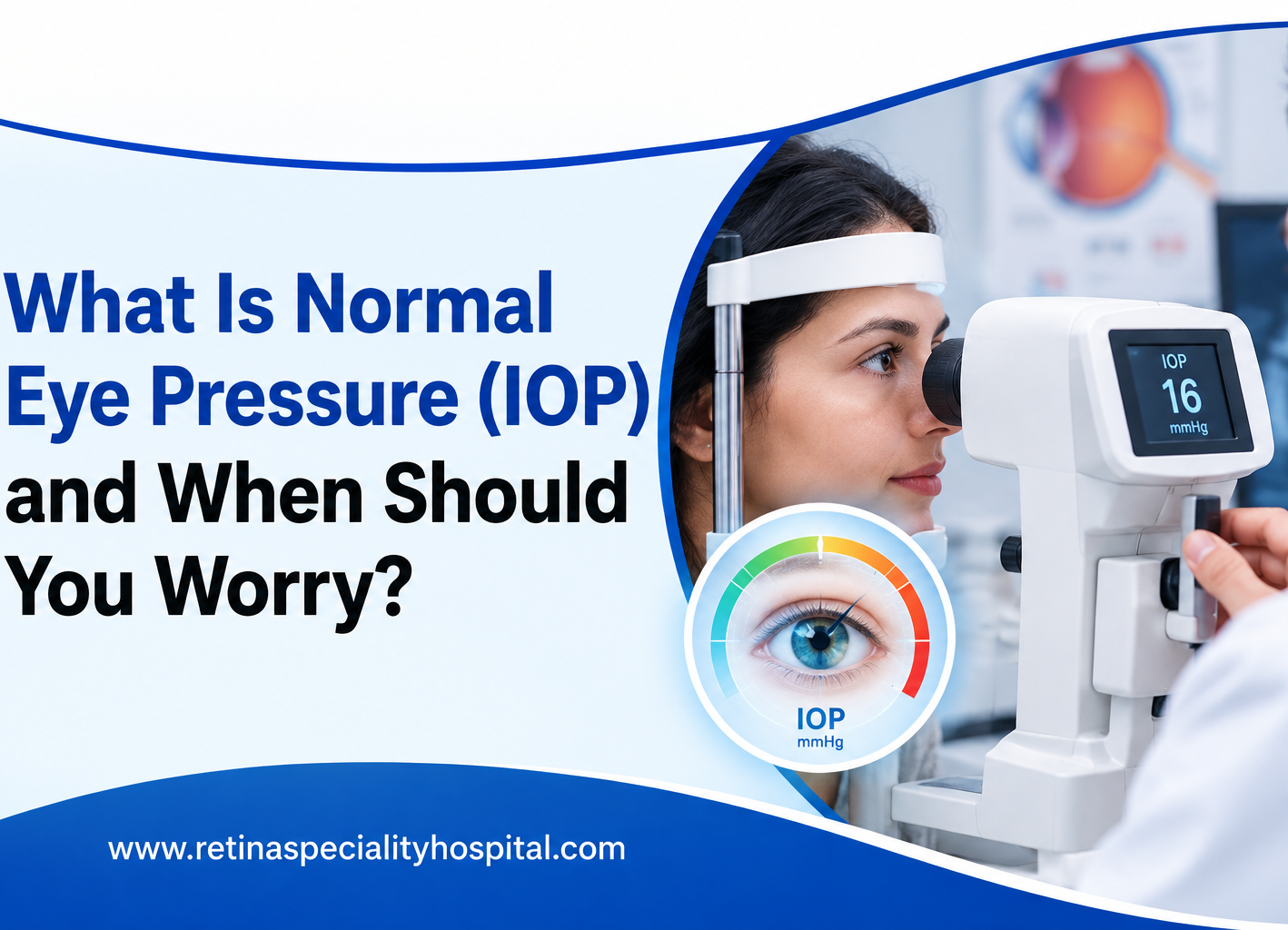
- Eye pressure measurement
- Dilated retinal examination
- Tear film assessment
Additional imaging or specialized testing may be recommended depending on the suspected condition.
Patients visiting an Indore best eye hospital benefit from advanced diagnostic technology capable of identifying both common and complex eye diseases accurately and efficiently.
Treatment Options for Halos Around Lights at Night
The most effective treatment for Halos Around Lights at Night depends on identifying the underlying cause. Since halos are a symptom rather than a disease, treating the root problem often improves or completely resolves the condition.
Your ophthalmologist may recommend one or more of the following treatments.
Prescription Glasses or Contact Lenses
If halos are caused by refractive errors such as astigmatism or changes in vision, updating your prescription can significantly improve visual clarity, especially at night.
Dry Eye Treatment
When dry eyes are responsible for light scatter, treatment may include:
- Lubricating eye drops
- Prescription medications
- Warm compresses
- Eyelid hygiene
- Lifestyle modifications
Improving the quality of the tear film often reduces nighttime glare and halos.
Cataract Surgery
If cataracts are causing halos, cataract surgery may be recommended once vision begins affecting daily activities. Replacing the cloudy natural lens with a clear artificial lens usually improves vision and reduces glare.
Glaucoma Management
Patients diagnosed with glaucoma require prompt treatment to reduce eye pressure and protect the optic nerve.
Treatment may include:
- Prescription eye drops
- Laser procedures
- Minimally invasive glaucoma surgery
- Conventional glaucoma surgery in selected cases
Early treatment helps preserve vision and prevents further damage.
Treatment for Corneal Disorders
If the cornea is responsible for halos, treatment depends on the specific condition.
Options may include:
- Medicated eye drops
- Specialty contact lenses
- Corneal procedures
- Corneal transplantation in advanced cases
Retinal Care
Although retinal diseases are less commonly associated with halos, patients experiencing halos together with flashes, floaters, or central vision changes may require specialized Retina treatment in Indore. Early diagnosis plays a crucial role in preventing permanent vision loss.
Tips to Reduce Halos Around Lights at Night
While not every cause can be prevented, these practical habits may reduce symptoms and improve night vision.
Helpful tips include:
- Wear your updated prescription glasses.
- Keep your windshield and eyeglasses clean while driving.
- Use lubricating eye drops if recommended.
- Limit nighttime driving if vision is significantly affected.
- Follow treatment plans for cataracts or glaucoma.
- Protect your eyes from injury by wearing safety eyewear.
- Attend routine eye examinations.
- Control diabetes and high blood pressure.
- Eat a balanced diet that supports eye health.
- Avoid smoking.
Maintaining overall eye health helps reduce the risk of developing conditions that cause halos.
Can Halos Around Lights Go Away on Their Own?
Sometimes.
Temporary halos caused by dry eyes, fatigue, or minor vision changes may improve once the underlying issue is addressed.
However, persistent halos should never be ignored, particularly if they interfere with driving, worsen over time, or occur alongside eye pain or blurred vision.
Seeking early evaluation helps prevent complications and ensures timely treatment if a more serious condition is present.
When Should You Visit an Eye Specialist?
You should schedule a comprehensive eye examination if you experience:
- Persistent halos around lights
- Difficulty driving at night
- Increasing glare
- Blurred vision
- Eye pain
- Redness
- Sudden flashes or floaters
- Decreased night vision
- Frequent headaches related to vision
- Sudden changes in eyesight
An experienced eye doctor in Indore can determine the cause and recommend the most appropriate treatment.
Patients looking for comprehensive diagnostic services and advanced eye care should consider visiting a Top eye hospital in Indore, where modern technology and experienced ophthalmologists help diagnose both common and complex eye conditions.
Why Early Diagnosis Matters
Many people assume halos are simply a normal part of aging or fatigue. In reality, they may be an early symptom of conditions that can permanently affect vision if left untreated.
Early diagnosis allows doctors to:
- Detect cataracts before vision worsens.
- Identify glaucoma before irreversible optic nerve damage occurs.
- Diagnose corneal disorders early.
- Recognize retinal diseases that require prompt treatment.
- Improve long-term visual outcomes through timely intervention.
If retinal disease is suspected, consultation with Top retina specialists in Indore helps ensure comprehensive evaluation and personalized management.
Protect Your Vision by Taking Night Vision Changes Seriously
Experiencing Halos Around Lights at Night occasionally may not always indicate a serious eye problem, but persistent or worsening symptoms deserve professional attention. Conditions such as cataracts, glaucoma, dry eyes, corneal disorders, and certain retinal diseases can all affect the way light enters the eye and impact your night vision.
Ignoring these symptoms may delay diagnosis and increase the risk of vision loss. A comprehensive eye examination can identify the underlying cause and help preserve healthy eyesight through early treatment.
Taking prompt action today can make a significant difference in protecting your vision for the future.
Frequently Asked Questions (FAQs)
1. Are halos around lights at night always caused by cataracts?
No. While cataracts are a common cause, halos may also result from dry eyes, glaucoma, corneal disorders, refractive errors, or temporary changes following certain eye surgeries.
2. Should I be worried if I suddenly see halos around lights?
Yes, especially if halos appear suddenly along with severe eye pain, blurred vision, nausea, vomiting, or a red eye. These symptoms may indicate acute angle-closure glaucoma, which requires emergency treatment.
3. Can dry eyes cause halos around lights at night?
Yes. An unstable tear film can scatter incoming light, causing temporary halos and blurred vision. Appropriate dry eye treatment often improves these symptoms.
Call to Action
Don’t ignore persistent Halos Around Lights at Night, especially if they affect your driving, daily activities, or are accompanied by pain or sudden vision changes. At Retina Speciality Hospital, our experienced ophthalmologists use advanced diagnostic technology to identify the underlying cause and provide personalized treatment plans. Whether you need an experienced eye doctor in Indore, specialized Retina treatment in Indore, or consultation with Top retina specialists in Indore, our dedicated team is committed to protecting your eyesight. If you’re searching for the Indore best eye hospital or a Top eye hospital in Indore, book your eye examination today and take the first step toward clearer, healthier vision.