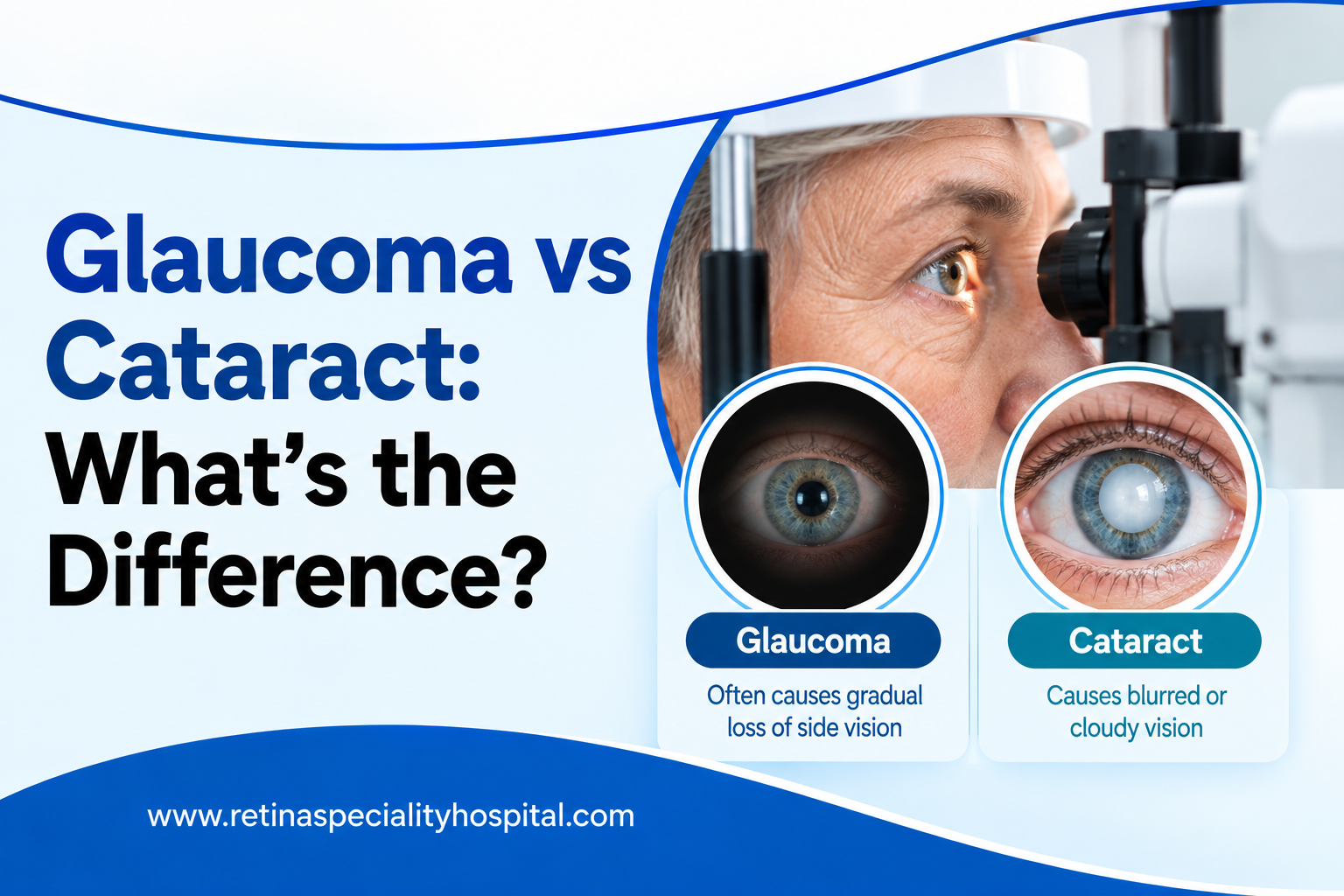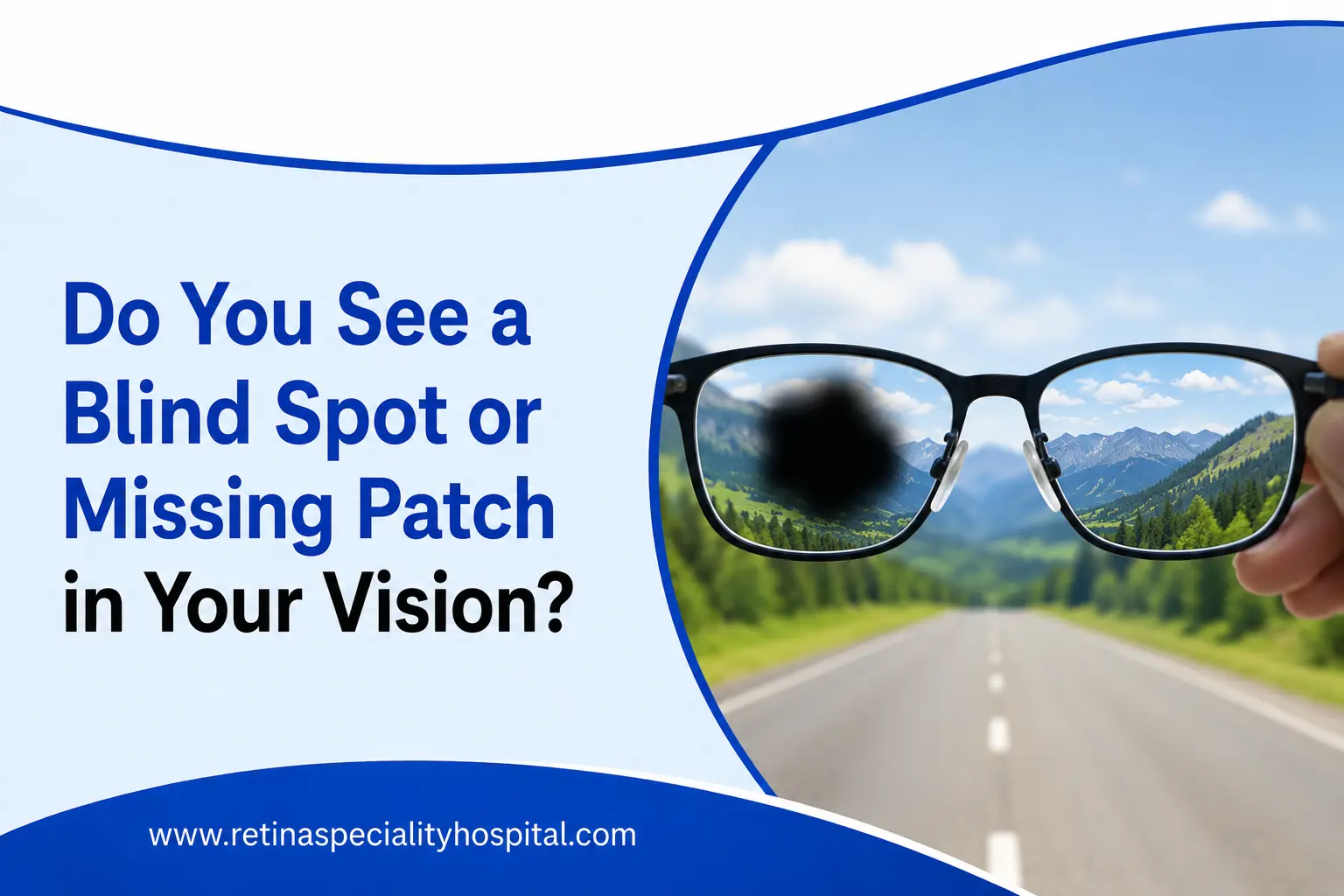









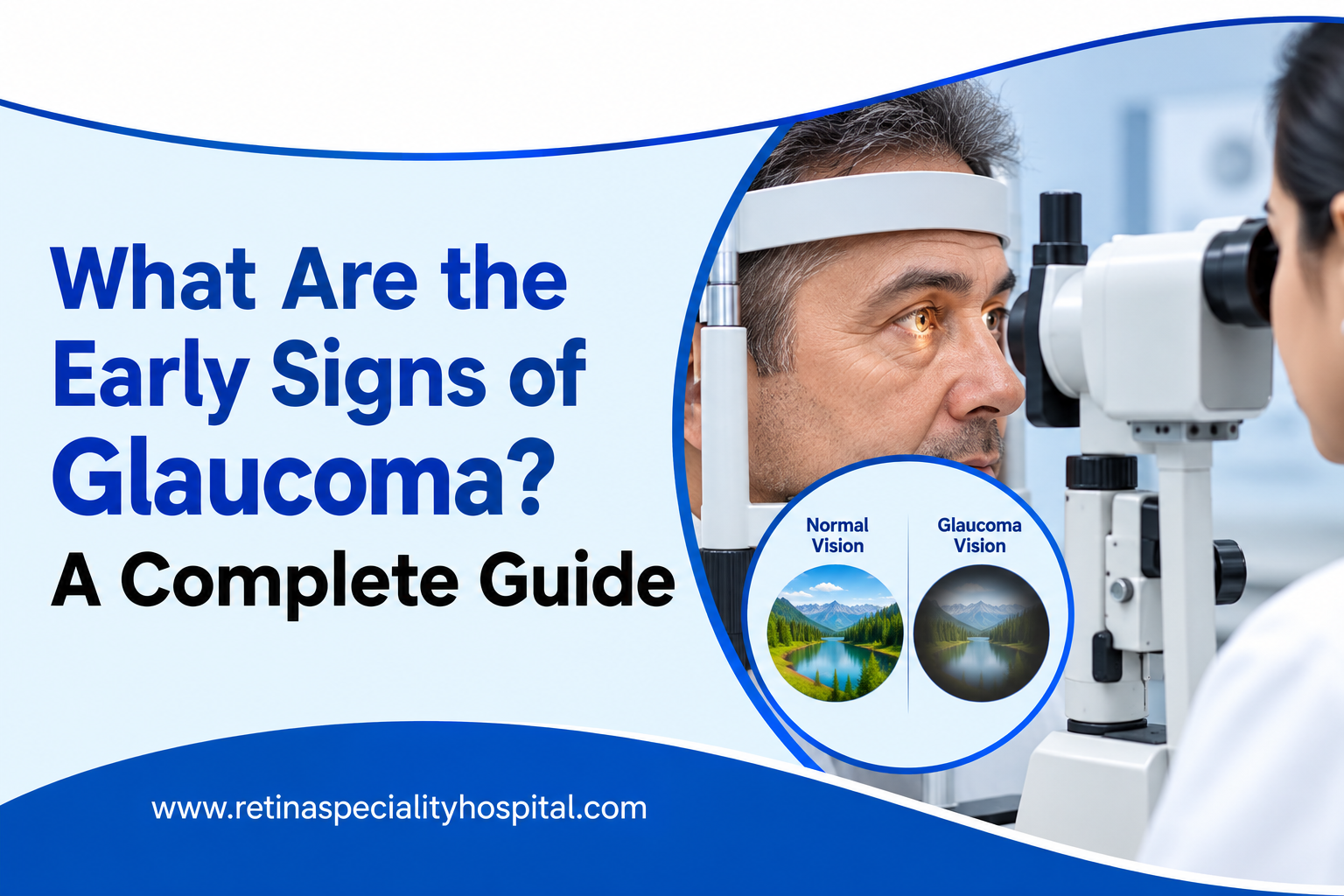
Glaucoma rarely announces itself. In most cases, the early signs of glaucoma are barely noticeable, which is why the condition is often called the “silent thief of sight.” The most common warning signs include a slow, painless loss of side (peripheral) vision, occasional blurred vision, and seeing halos around lights. Since these symptoms build up gradually, regular eye checkups are the only reliable way to catch glaucoma before it damages your vision permanently.
At Retina Speciality Hospital, one of the trusted names for eye hospital in Indore, our glaucoma team frequently sees patients who arrive only after noticeable vision loss. This guide explains what to watch for, who is at risk, and when to consult a glaucoma specialist in Indore.
What Is Glaucoma? Understanding the “Silent Thief of Sight”
Glaucoma is a group of eye conditions that damage the optic nerve, usually because of a buildup of fluid pressure inside the eye. This fluid, called aqueous humor, normally drains out at a steady rate. When drainage slows down, pressure builds up and gradually harms the optic nerve fibers that carry visual information to the brain.
The damage caused by glaucoma is irreversible. Vision that has already been lost cannot be restored, which is exactly why catching the early signs of glaucoma matters so much. Left untreated, glaucoma can progress to complete blindness.
What Are the Early Signs of Glaucoma?
The tricky part about glaucoma is that the most common type, open-angle glaucoma, has almost no early symptoms. Damage happens slowly over months or years before a person notices anything unusual. However, some subtle indicators do appear if you pay close attention:
- Mild difficulty seeing objects at the edge of your vision (peripheral vision loss)
- Needing more light to read or do close-up work
- Frequent changes in eyeglass or contact lens prescription
- Occasional blurred vision, especially after physical activity
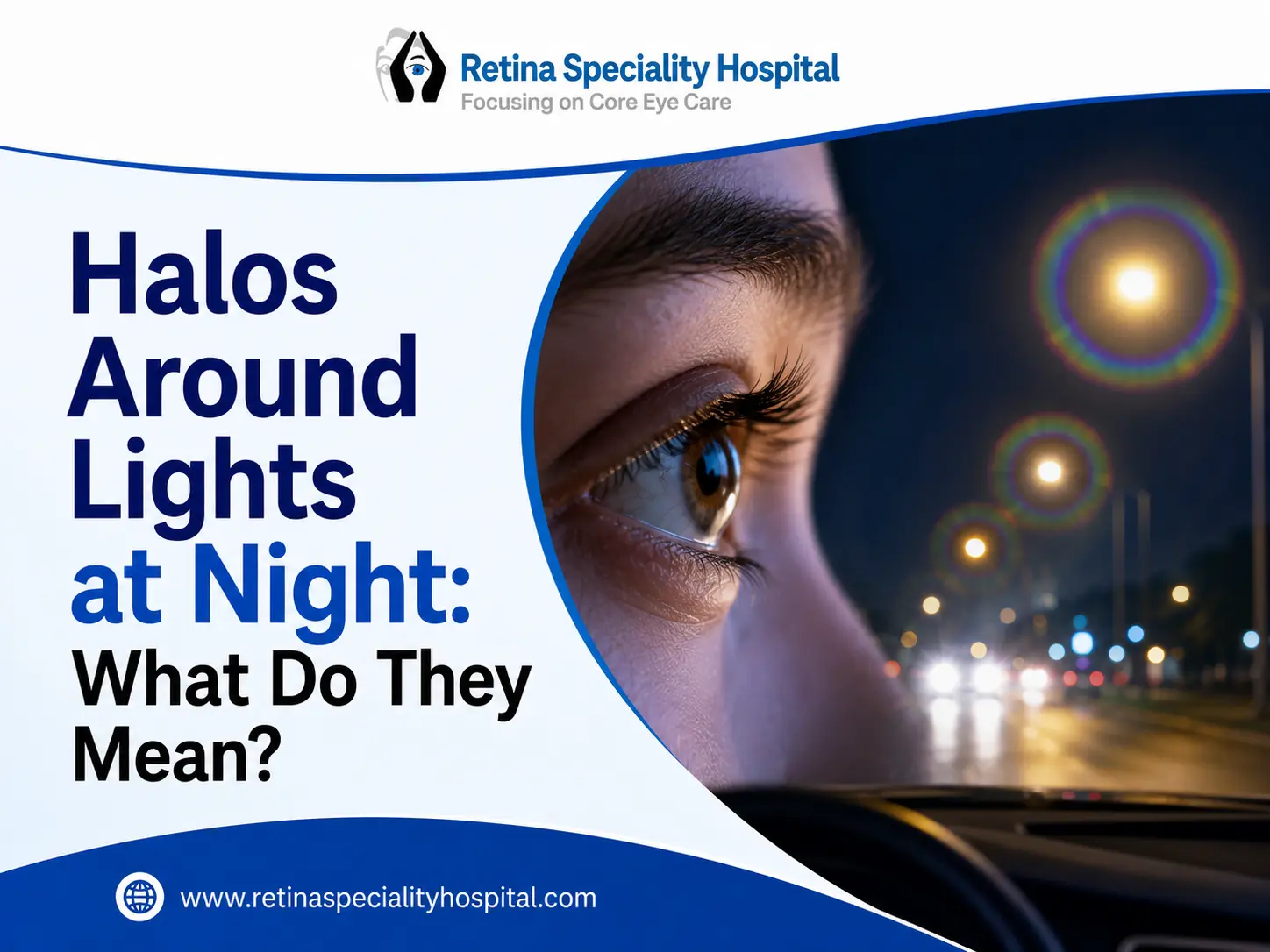
- Seeing faint halos or rings around lights at night
- Mild headaches or a dull ache around the eyes
A different, faster-moving type called angle-closure glaucoma can cause a sudden, severe attack. This is a medical emergency and requires immediate attention. Warning signs of an acute attack include:
- Severe eye pain that comes on suddenly
- Intense headache, often on one side
- Blurred vision or seeing colored halos around lights
- Redness in the eye
- Nausea or vomiting
If you notice any of these acute symptoms, visit an eye hospital immediately rather than waiting for a scheduled appointment.
Early Signs of Glaucoma: Quick Checklist
| Symptom | Open-Angle Glaucoma | Angle-Closure Glaucoma (Attack) |
| Onset | Slow, over years | Sudden, within hours |
| Pain | Usually none | Severe eye pain |
| Vision change | Gradual peripheral loss | Sudden blurring, halos |
| Redness | Rare | Common |
| Nausea/vomiting | No | Often present |
| Urgency | Routine screening advised | Emergency, seek care immediately |
Who Is at Risk of Developing Glaucoma?
Anyone can develop glaucoma, but certain factors increase the risk significantly. You should be extra cautious about regular screening if you fall into any of these categories:
- Age above 40 years
- Family history of glaucoma
- Diabetes or high blood pressure
- High myopia (nearsightedness) or high hyperopia
- Long-term use of steroid medications or steroid eye drops
- Previous eye injury or eye surgery
- Thin corneas or unusually high eye pressure detected earlier
Glaucoma is not limited to adults. Congenital and pediatric glaucoma, though rare, can occur in infants and young children, which is why routine pediatric eye checkups matter as well.
How Is Glaucoma Diagnosed?
Since early signs of glaucoma are so subtle, diagnosis depends on specific clinical tests rather than symptoms alone. A comprehensive glaucoma evaluation at a good eye hospital in Indore typically includes:
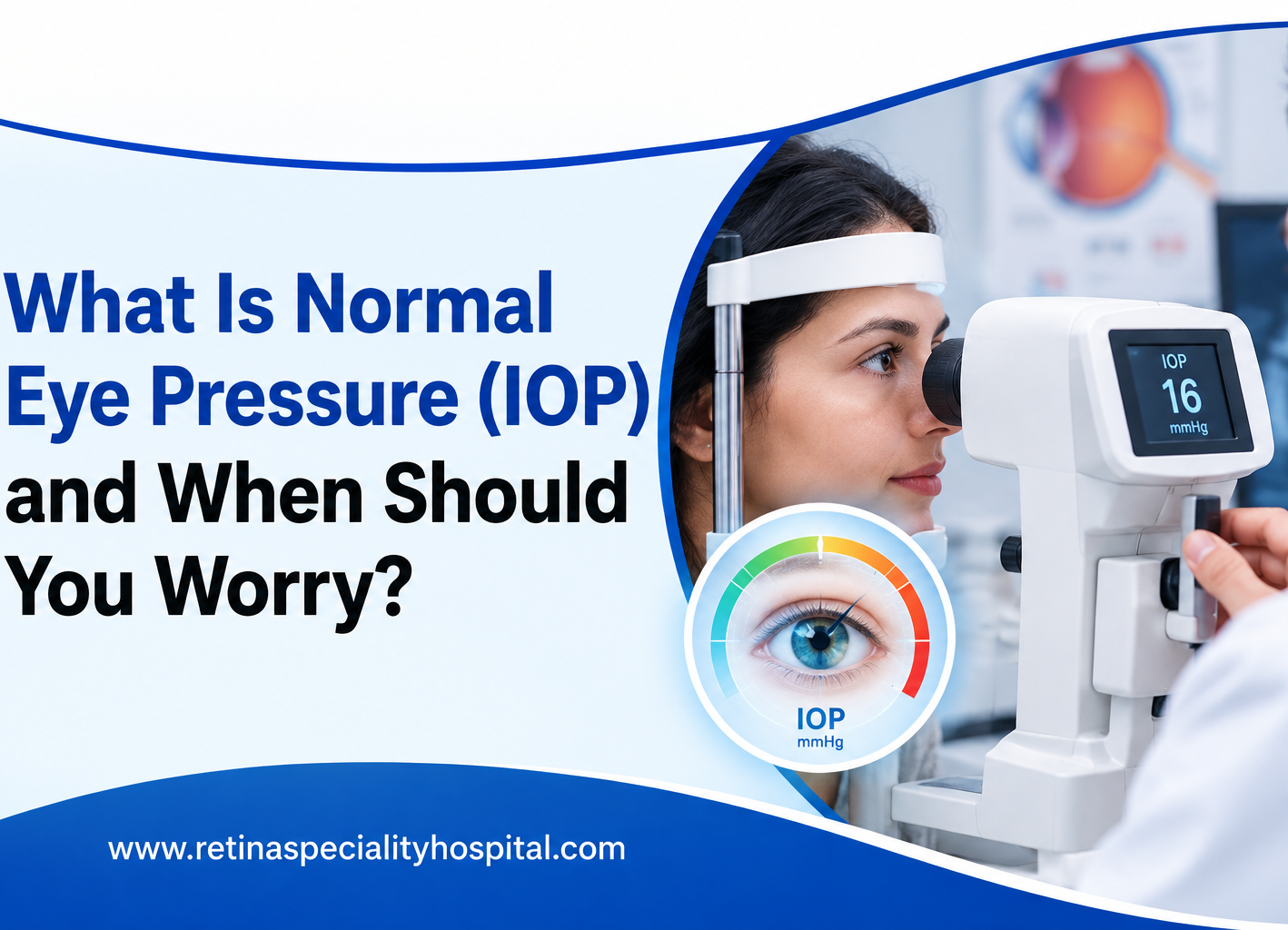
- Tonometry – measures intraocular pressure (IOP)
- Gonioscopy – examines the drainage angle of the eye
- Visual field test (perimetry) – checks for blind spots in peripheral vision
- Optical Coherence Tomography (OCT) – images the optic nerve fiber layer for early damage
- Pachymetry – measures corneal thickness, which affects pressure readings
- Dilated fundus examination – allows the doctor to directly view the optic nerve
These tests together allow an ophthalmologist to detect glaucoma years before vision loss would otherwise become noticeable.
Why Glaucoma Screening in Indore Matters
Many patients postpone eye exams simply because their vision “feels fine.” Unfortunately, by the time open-angle glaucoma causes noticeable symptoms, a significant portion of vision may already be permanently lost. This is why eye care organizations recommend a baseline glaucoma screening at age 40, with more frequent checkups for high-risk individuals.
If you are searching for glaucoma screening in Indore, choose a center equipped with modern diagnostic tools such as OCT and automated perimetry, rather than relying on a basic eye pressure check alone.
Glaucoma Treatment Options at Retina Speciality Hospital
While vision already lost to glaucoma cannot be reversed, early detection allows most patients to preserve their remaining vision through appropriate treatment. As a glaucoma eye specialist in Indore, our team offers a full range of management options based on the type and stage of glaucoma:
- Medicated eye drops to lower intraocular pressure
- Selective Laser Trabeculoplasty (SLT) to improve fluid drainage
- Minimally invasive glaucoma surgery (MIGS) for select patients
- Trabeculectomy or drainage implant surgery for advanced cases
- Regular monitoring through OCT and visual field testing to track progression
Choosing the best glaucoma treatment in Indore depends on an accurate diagnosis, which is why a detailed evaluation always comes first at Retina Speciality Hospital.
When Should You See a Glaucoma Doctor in Indore?
Book an appointment with a glaucoma doctor in Indore if you notice any of the following:
- You are above 40 and haven’t had an eye pressure check in over a year
- You have a family history of glaucoma
- You’ve noticed reduced side vision or frequent prescription changes
- You experience sudden eye pain, redness, or halos around lights
- You have diabetes, hypertension, or use steroid medication long term
Key Takeaways
- Most early signs of glaucoma are subtle or absent, especially in open-angle glaucoma
- Watch for gradual peripheral vision loss, frequent prescription changes, and halos around lights
- Sudden eye pain with nausea and blurred vision signals an angle-closure attack, a medical emergency
- Routine screening after age 40, or earlier with risk factors, is the most reliable way to catch glaucoma
- Vision lost to glaucoma cannot be restored, but early treatment can protect remaining vision
FAQs related to Early Signs of Glaucoma
1. Can glaucoma be detected in a routine eye checkup?
Yes. A comprehensive eye exam that includes tonometry, OCT, and a visual field test can detect glaucoma before you notice any symptoms yourself.
2. Is glaucoma hereditary?
Family history is one of the strongest risk factors for glaucoma. If a parent or sibling has glaucoma, your own risk is considerably higher, so earlier and more frequent screening is recommended.
3. Can glaucoma be cured completely?
Glaucoma cannot be cured, but it can be controlled effectively with eye drops, laser treatment, or surgery. The main goal of treatment is to prevent further optic nerve damage and preserve existing vision.
4. At what age should I start glaucoma screening?
Most eye care guidelines recommend a baseline glaucoma screening at age 40. If you have risk factors such as diabetes, high myopia, or a family history, screening should start earlier.
5. Does high eye pressure always mean glaucoma?
Not necessarily. Some people have higher than normal eye pressure without any optic nerve damage; this is called ocular hypertension. However, they are considered “glaucoma suspects” and need regular monitoring since their risk of developing glaucoma later is higher.