








Yes, cataract surgery is generally safe for people with diabetes, and most patients see clearly after it. The risk is a little higher than in non-diabetic patients, mainly because of diabetic retinopathy, swelling at the centre of the retina (macular edema), slower healing, and infection. These risks are lower when your blood sugar is under control, your retina is checked before surgery, and you follow up closely afterwards.
Why Do People with Diabetes Get Cataracts?
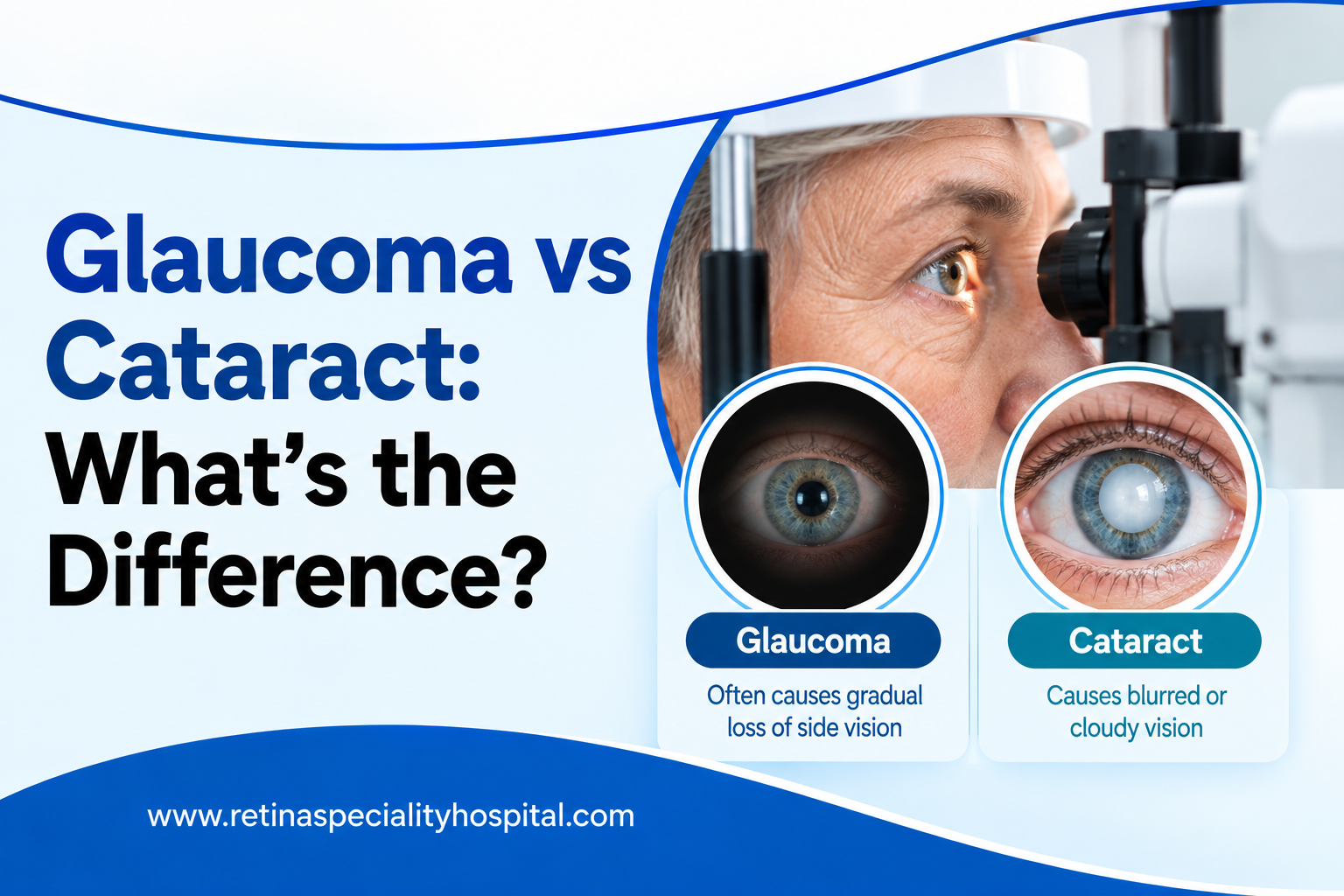
High blood sugar can change the clarity of the eye’s natural lens. Over time, this leads to clouding, which is a cataract.
People with diabetes tend to:
• Develop cataracts at an earlier age
• Notice faster changes in vision
• Have fluctuating vision when sugar levels swing
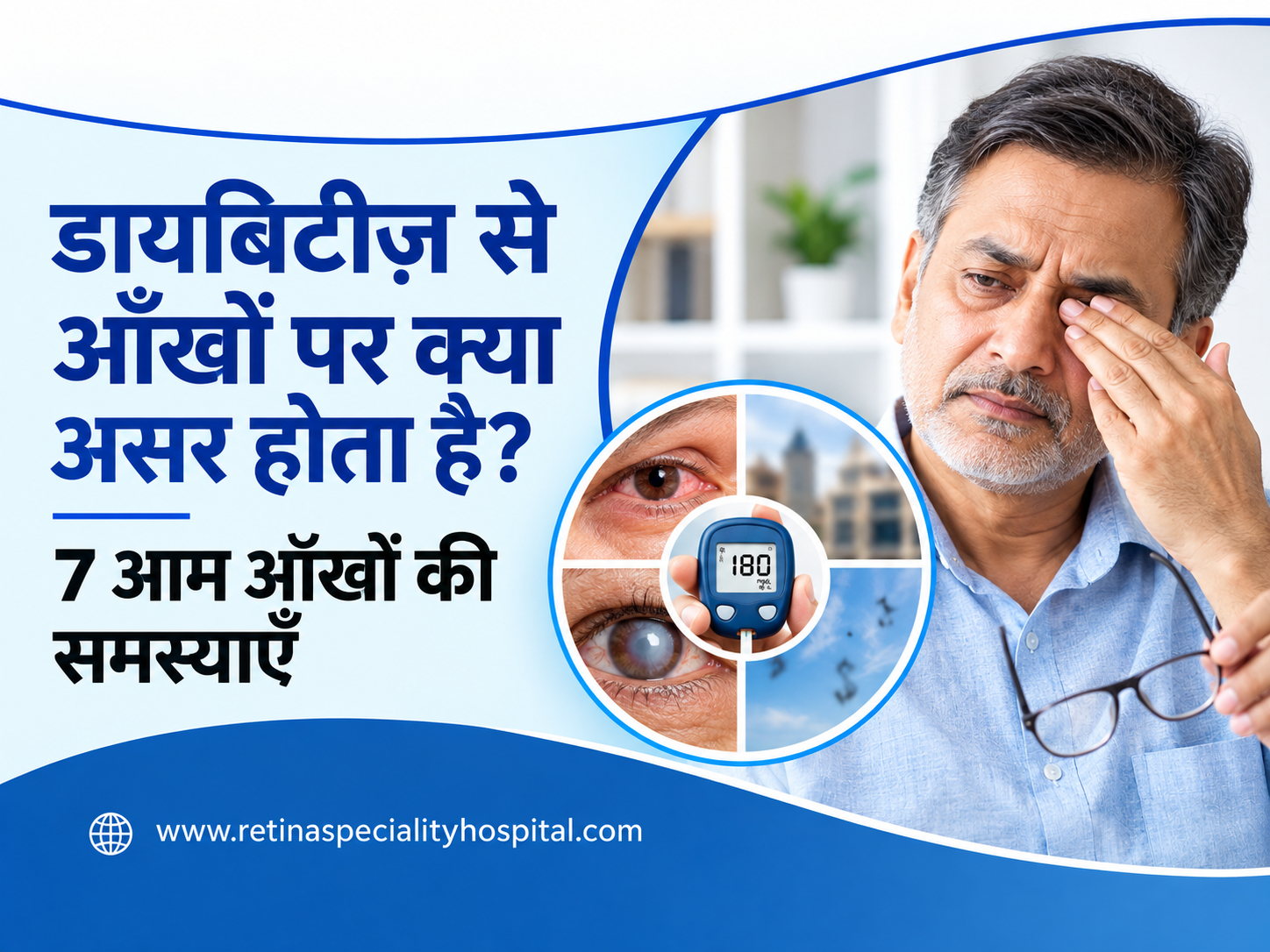
Blurry vision can also be caused by diabetic eye disease Treatment in indore , so a proper eye exam is needed before assuming it is only a cataract.
Is Cataract Surgery Riskier for Diabetics?
It carries some extra risks, but these can be managed. The table below shows what your surgeon watches for.
| Concern | Why it matters in diabetes | How it is managed |
| Diabetic retinopathy | Surgery can sometimes make existing retinopathy progress | Retina check before surgery, laser or injections first if needed |
| Macular edema | Swelling at the centre of the retina can blur vision after surgery | Anti-inflammatory eye drops, close follow-up, retina treatment |
| Infection | High sugar can lower resistance to infection | Sugar control, strict hygiene, antibiotic drops |
| Slower healing | Corneal and wound healing may take longer | Regular check-ups, careful use of drops |
| Small pupil | Pupils may dilate poorly, making surgery more complex | Specialized techniques (complex cataract management) |
| Dry eye | Diabetes can reduce tear quality | Lubricating drops |
With good planning, most diabetic patients recover well.
The 3-Point Readiness Check: Sugar, Retina, BP
Before booking cataract surgery in indore , ask your doctor to confirm these three things.
1. Sugar: Is your blood sugar stable and under control? Your doctor will set your target based on your HbA1c and overall health.
2. Retina: Has your retina been examined with dilated eye tests and, where needed, an OCT scan of the macula?
3. BP: Is your blood pressure under control? High blood pressure can add stress to the retina.
If any of the three is off, surgery may still go ahead, but your surgeon will plan around it or treat it first.
What Tests Are Done Before Cataract Surgery in Diabetic Patients?
• Detailed eye examination with dilated pupils
• Retina and macula evaluation (OCT where required)
• Eye pressure check
• Retina and macula evaluation (OCT where required)
• Eye pressure check
• Blood sugar and HbA1c review
• Review of all medicines, including insulin and tablets
Your surgeon may recommend treating retinopathy or macular swelling before cataract surgery to protect your vision.
How Should You Prepare for the Surgery Day?
• Follow your doctor’s instructions on meals, insulin, and diabetes tablets. Do not skip or change doses on your own.
• Carry your medicines and recent sugar reports.
• Tell the team about low-sugar episodes, kidney problems, or heart conditions.
• Arrange for someone to accompany you.
What Is the Best Type of Cataract Surgery for Diabetics?
Most patients are treated with phacoemulsification (micro-incision cataract surgery), where the cloudy lens is broken into tiny pieces and removed through a very small incision. A smaller incision generally supports faster healing.
The lens choice matters too:
| Option | Suitability in diabetes |
| Standard monofocal IOL | Commonly preferred, especially if the retina needs monitoring |
| Premium / multifocal IOL | Considered only if the retina is healthy; surgeons may avoid it when retinopathy or macular disease is present |
| Complex cataract management | Needed for small pupils, dense cataracts, or other complicating eye conditions |
Your surgeon will recommend the right option after examining your eyes.
What Is Recovery Like for Diabetic Patients?
Vision usually improves in the first few days, but healing can take longer than in non-diabetic patients.
Do:
• Use all eye drops exactly as prescribed
• Keep blood sugar controlled
• Attend every follow-up visit
• Protect the eye from dust and water
Avoid:
• Rubbing the eye
• Skipping drops or follow-ups
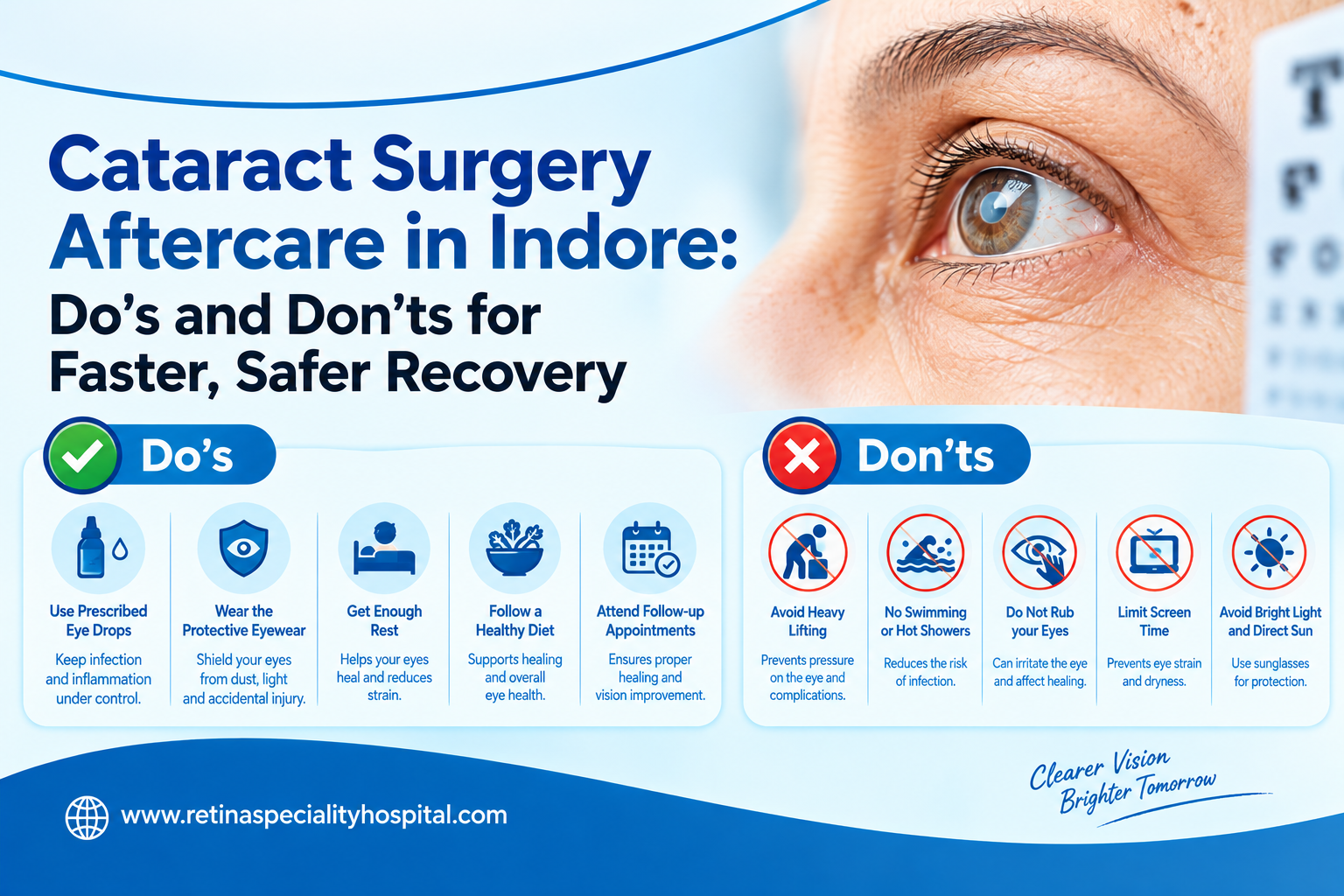
• Swimming or heavy lifting until your doctor allows it
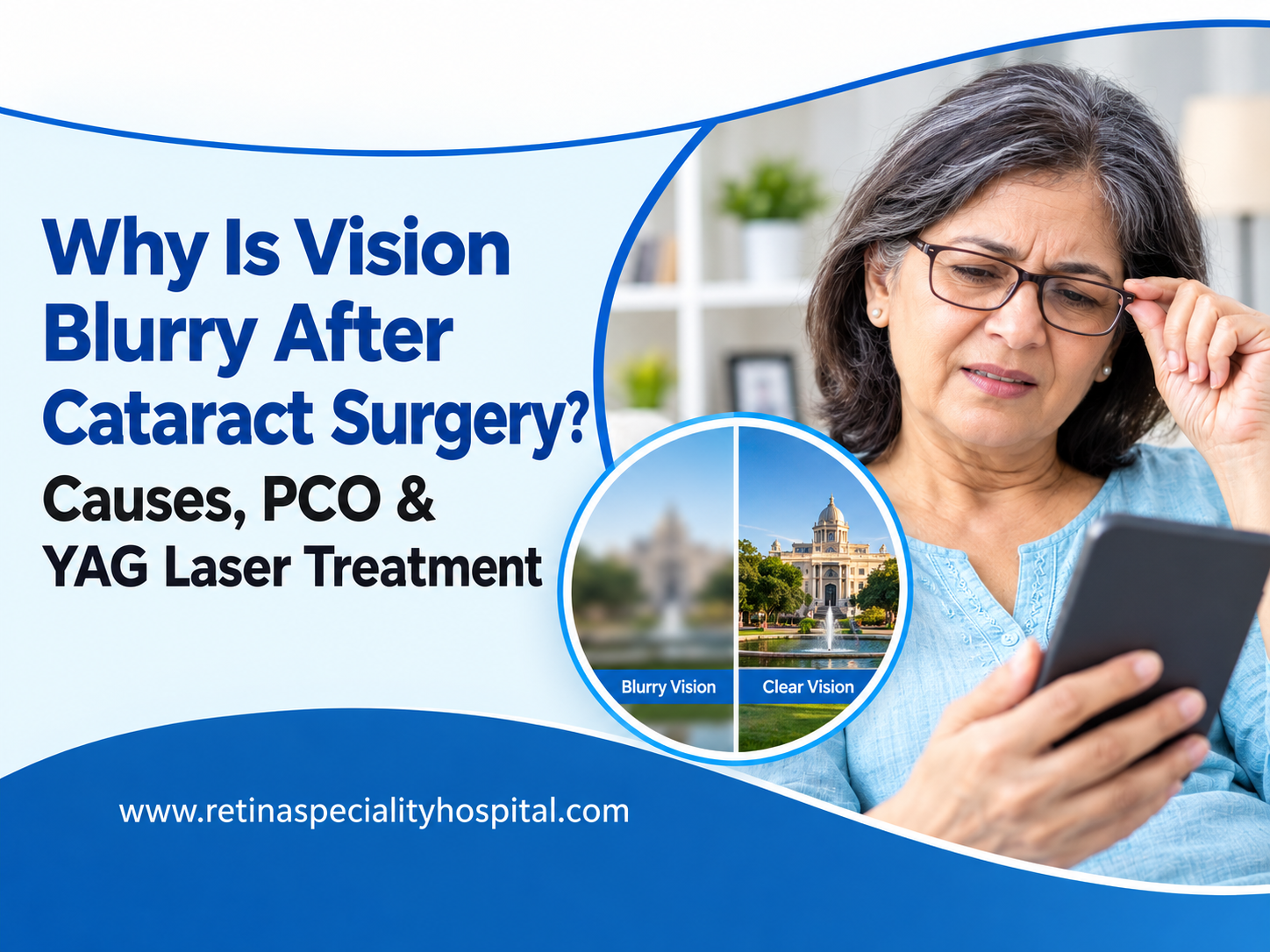
Some patients notice blur weeks later. This can be macular swelling or, months to years later, PCO. Read more in our guide on why vision is blurry after cataract surgery.
When to See an Eye Doctor Immediately
Contact your eye hospital urgently if you notice:
• Sudden drop in vision
• Increasing eye pain
• Worsening redness or discharge
• Flashes of light or a sudden shower of new floaters
• A dark curtain or shadow in your vision
Why Retina Care Matters in Diabetic Cataract Surgery
In diabetes, the cataract is only one part of the picture. The retina decides how well you can see after the lens is replaced. A cataract surgeon who works closely with a retina team can spot retinopathy early, treat it at the right time, and plan surgery safely. If you are looking for a retina specialist in Indore, choose a hospital where cataract and retina care are available together.
Diabetic Eye Treatment in Indore: Beyond Cataract Surgery
Cataract is only one way diabetes affects the eyes. If you are looking for diabetic eye treatment in Indore, these are the main conditions to know about.
| Condition | What happens | Common treatment (depends on stage) |
| Diabetic retinopathy | Damaged blood vessels in the retina leak or bleed | Sugar control, laser treatment, eye injections, surgery in advanced cases |
| Diabetic macular edema | Fluid swelling at the centre of the retina | Eye injections, laser, anti-inflammatory drops |
| Cataract | Lens clouds earlier and faster | Cataract surgery |
| Glaucoma | Higher risk of raised eye pressure | Drops, laser, or surgery |
Early diabetic retinopathy often has no symptoms, so a yearly dilated eye check-up is advised even if you see well. Your retina specialist for diabetes in Indore can then catch changes before they affect your vision.
How to Choose the Best Hospital for Diabetic Retinopathy in Indore
Look for a hospital that offers:
• Dilated retina examination and OCT scans
• Retina treatment such as laser and injections under the same roof
• Cataract surgeons who plan surgery together with your retina findings
• A clear follow-up plan and communication with your physician
• Experienced doctors who explain your options honestly
Retina Speciality Hospital is a diabetic eye care centre in Indore where your cataract surgeons, Dr. Ritu Verma and Dr. Rohit Khatri, review your eyes with your diabetes in mind, so the right treatment is planned in the right order.
Who Can Treat You at Retina Speciality Hospital, Indore?
Cataract surgery at Retina Speciality Hospital is led by Dr. Ritu Verma and Dr. Rohit Khatri.
• Dr. Ritu Verma, Senior Consultant, Cataract, Refractive & Cornea Surgeon (MBBS, DOMS Ophthalmology)
• Dr. Rohit Khatri, Senior Consultant, Cataract, Refractive & Glaucoma (MBBS, MS, FNABEH, FICO)
Diabetes affects more than the lens. Dr. Ritu Verma’s experience in cataract and IOL surgery helps in choosing the right lens for a diabetic eye. Dr. Rohit Khatri’s experience in cataract and glaucoma management is valuable too, because people with diabetes also have a higher risk of glaucoma.
Book Appointment with Dr. Ritu Verma | Book Appointment with Dr. Rohit Khatri: [Insert booking URL]
Cost of Cataract Surgery for Diabetic Patients
The cost depends on the surgery type, the lens chosen, any retina treatment needed beforehand, and insurance coverage. Diabetic patients may need extra tests or treatments, which can change the final estimate.
FAQs About Is Cataract Surgery Safe for People with Diabetes
1. Is cataract surgery safe for diabetic patients?
Yes, it is generally safe when blood sugar is controlled and the retina is evaluated before surgery.
2. Can I have cataract surgery if my sugar is high?
Surgeons prefer stable, controlled sugar. Your doctor will decide whether to proceed or first improve your control.
3. Can cataract surgery make diabetic retinopathy worse?
It can sometimes accelerate existing retinopathy, which is why a retina check before and after surgery is important.
4. Will my vision be as good as in a person without diabetes?
Many patients see very well. The final result depends on the health of the retina and macula.
5. How long does recovery take in diabetes?
Initial recovery takes days, but full healing may take a little longer, with closer follow-up.
6. Which lens is best for a diabetic patient?
Often a standard monofocal lens, especially if the retina needs monitoring. Your surgeon will guide you.
7. Can diabetic patients get laser cataract surgery?
Suitability depends on your eyes. Your surgeon will advise after a detailed examination.
8. Do I need to stop my diabetes medicines before surgery?
Never stop or change doses without your doctor’s advice. Follow the instructions given by your surgeon and physician.
9. Why is my vision blurry after cataract surgery with diabetes?
It can be normal healing, macular swelling, dry eye, or PCO. Visit your doctor to find the exact cause.
10. Which eye hospital in Indore is good for diabetic cataract surgery?
Choose a hospital with experienced cataract surgeons and retina care available together, such as Retina Speciality Hospital, Indore.
11. What is the best hospital for diabetic retinopathy in Indore?
Choose a hospital that offers a full dilated retina check-up, retina treatment, and cataract care together, with experienced doctors and clear follow-up. Retina Speciality Hospital, Indore, is a diabetic eye care centre where Dr. Ritu Verma and Dr. Rohit Khatri treat cataract in diabetic patients.
12. When should I see a retina specialist for diabetes in Indore?
See one at least once a year with a dilated eye exam, and urgently if you notice sudden blur, floaters, flashes, or a dark shadow in your vision.
Conclusion
Cataract surgery is safe and effective for most people with diabetes. The key is preparation: keep your sugar and blood pressure controlled, get your retina checked, and follow up closely after surgery. Do not delay treatment if your vision is getting worse.
Book Your Eye Check-Up Today
If you have diabetes and cataract, or need diabetic eye treatment in Indore, consult Dr. Ritu Verma or Dr. Rohit Khatri at Retina Speciality Hospital, Indore. Call [Phone Number] or [Book an Appointment] now.