








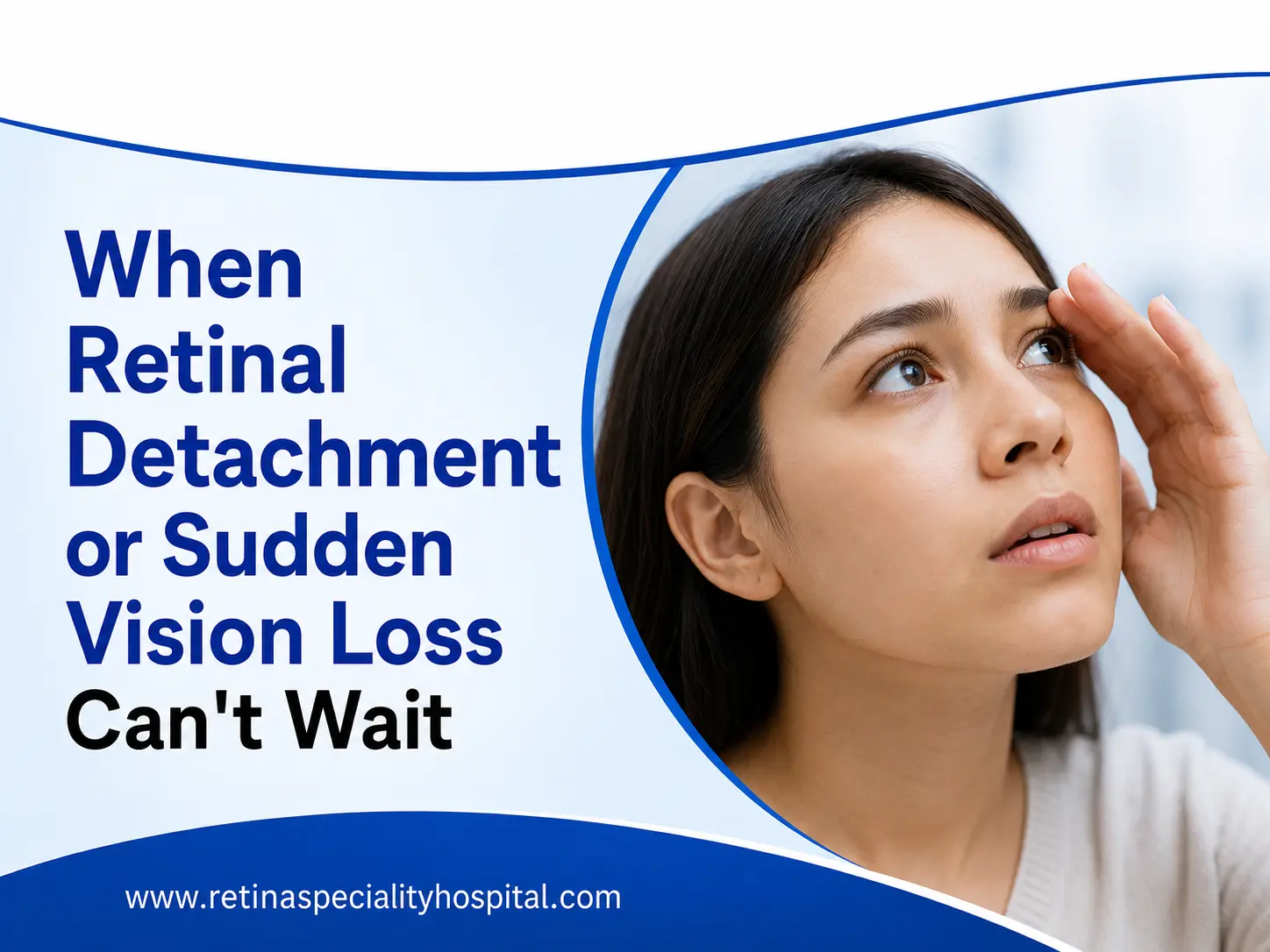
Sudden vision loss is a medical emergency, and a retinal detachment is one of its most serious causes. If your sight suddenly drops in one eye, or a dark curtain or shadow slides across your view, do not wait to see if it passes. Get to a retina specialist or an eye doctor in Indore the same day, because the retina can be saved only if it is treated fast.
This guide explains what causes sudden vision loss, the warning signs of a retinal detachment, and why quick action protects your sight. The message is simple: when it comes to your eyes, hours matter.
What Is Sudden Vision Loss, and Why Is It an Emergency?
Sudden vision loss means a rapid drop in sight over seconds, minutes, or hours, usually in one eye. It may be total or partial, painless or painful, and it can affect your central or side vision.
Because the eye’s tissues are delicate, a sudden change often signals that something serious is happening inside the eye. The retina, the light-sensitive layer at the back of the eye, can be starved of blood or pulled out of place in a very short time.
Any sudden change in vision deserves a same-day check with a retina specialist doctor. Waiting even a day can be the difference between recovering your sight and losing it for good.
Retinal Detachment: A Leading Cause of Sudden Vision Loss
A retinal detachment happens when the retina peels away from the back wall of the eye. Once it lifts off, it loses its blood supply and stops working, which causes vision to fade quickly.
Most detachments begin with a small retinal tear. Fluid then seeps under the retina and lifts it, much like wallpaper peeling off a damp wall.
If the detachment reaches the macula, the part of the retina responsible for sharp central vision, the loss can become permanent. This is exactly why sudden vision loss from a detachment cannot wait for an appointment next week.
Warning Signs You Should Never Ignore

Retinal detachment is usually painless, so the warning signs are visual, not physical. Recognising them early gives you the best chance of a full recovery.
Seek emergency eye care if you notice:
• A sudden burst of new floaters, the specks or threads that drift across your view
• Flashes of light, like tiny sparks or lightning, especially in the corner of your eye
• A dark shadow or curtain moving across part of your vision
• A sudden drop or blurring of vision in one eye
• A grey or wavy area where your vision used to be clear
If you have even one of these symptoms, treat it as an emergency. A quick call to a vision care centre for retina care can save your sight.
Common Causes of Sudden Vision Loss
Retinal detachment is not the only reason sight can fail suddenly. Several conditions can cause sudden vision loss, and each one needs prompt attention.
The table below shows common causes and how urgent they are.
| Cause | Typical Sign | Urgency |
| Retinal detachment | Curtain or shadow, floaters, flashes | Same-day emergency |
| Retinal vein or artery blockage | Sudden painless loss in one eye | Emergency |
| Vitreous haemorrhage (bleeding) | Sudden floaters, hazy or red-tinted vision | Urgent |
| Acute glaucoma | Painful red eye, halos, nausea | Emergency |
| Wet macular degeneration | Distorted or missing central vision | Urgent |
| Stroke affecting the eye | Vision loss, sometimes with weakness or slurred speech | Call emergency services |
Because these causes look similar to the patient, only an eye examination can tell them apart. That is why any sudden vision loss should be checked by a retina specialist doctor without delay.
What to Do When Sudden Vision Loss Strikes
Knowing the right steps in the first hour can protect your vision. Stay calm, act quickly, and avoid anything that could make the problem worse.
Do the following:
• Contact an eye doctor in Indore or an emergency eye hospital right away.
• Keep your head still and avoid sudden movements or heavy lifting.
• Note when the symptoms started, as this helps your doctor.
• Bring your glasses, medicines, and any past eye records.
Avoid these mistakes:
• Do not rub or press the affected eye.
• Do not wait overnight to see if it clears on its own.
• Do not drive yourself if your vision is affected; ask someone to take you.
Fast, calm action gives the surgeon the best chance to repair the retina and restore your sight.
How a Retina Specialist Treats Retinal Detachment
Modern retina surgery is highly effective, especially when the detachment is treated early. The goal is to seal any tears and reattach the retina to the back of the eye.
Depending on the type and severity, a retina specialist may use one of these treatments:
• Laser or freezing treatment to seal a small retinal tear before it detaches.
• Vitrectomy, where the surgeon removes the gel inside the eye and reattaches the retina, often placing a gas bubble to hold it in place.
• Scleral buckling, where a soft silicone band gently presses the eye wall inward so the retina can settle back.
Why Choosing the Right Eye Hospital in Indore Matters
When minutes count, the quality of the hospital you reach makes a real difference. A dedicated retina centre has the specialists, technology, and operating theatres ready to act fast.
Look for an Indore best eye hospital that offers:
• Experienced retina specialist doctors available for emergencies
• Advanced imaging such as OCT and ultrasound to diagnose quickly
• A modular operating theatre for urgent retinal surgery
• Accreditation, ideally a NABH hospital in Indore, for safe, standardised care
Choosing a top eye hospital in Indore with a focused retina team means your emergency is handled by people who treat these cases every day. If your general eye doctor in Indore suspects a detachment, they will refer you straight to a retina specialist so no time is lost.
Quick Checklist: Treat It as an Emergency If You Notice
• A sudden shower of floaters or flashes of light
• A dark curtain or shadow over part of your vision
• Sudden or rapidly worsening vision loss in one eye
• Distorted or missing central vision
• Any sudden change in sight after an eye injury
If you tick even one box, contact an eye doctor in Indore immediately.
Frequently Asked Questions
1. Can sudden vision loss be reversed?
Sometimes, yes, if it is treated quickly. Conditions like retinal detachment or a blocked retinal blood vessel can often be treated to restore or preserve vision when caught early. However, if the macula is affected or treatment is delayed, some loss may be permanent, which is why same-day care from a retina specialist is so important.
2. Is retinal detachment painful?
No, retinal detachment is usually painless. This is what makes it so dangerous, because people may ignore the warning signs. Instead of pain, you notice visual clues such as floaters, flashes, or a shadow moving across your vision, and these should be treated as an emergency.
3. How quickly should retinal detachment be treated?
Retinal detachment should be treated within hours to a few days, ideally before the central macula is involved. The sooner the retina is reattached, the better the chance of recovering good vision. This is why sudden vision loss should never be left overnight.
Don’t Wait. Protect Your Vision Today
Your eyesight is too precious to risk. If you or a loved one has sudden vision loss, new floaters, flashes, or a shadow over your sight, act now, not later.
The retina specialists at Retina Speciality Hospital, Indore provide prompt, expert care for retinal detachment and other eye emergencies. Call 0731-2553377 or book an urgent consultation today, and give your vision the fast, expert care it deserves. Meet our retina specialists to learn more.