







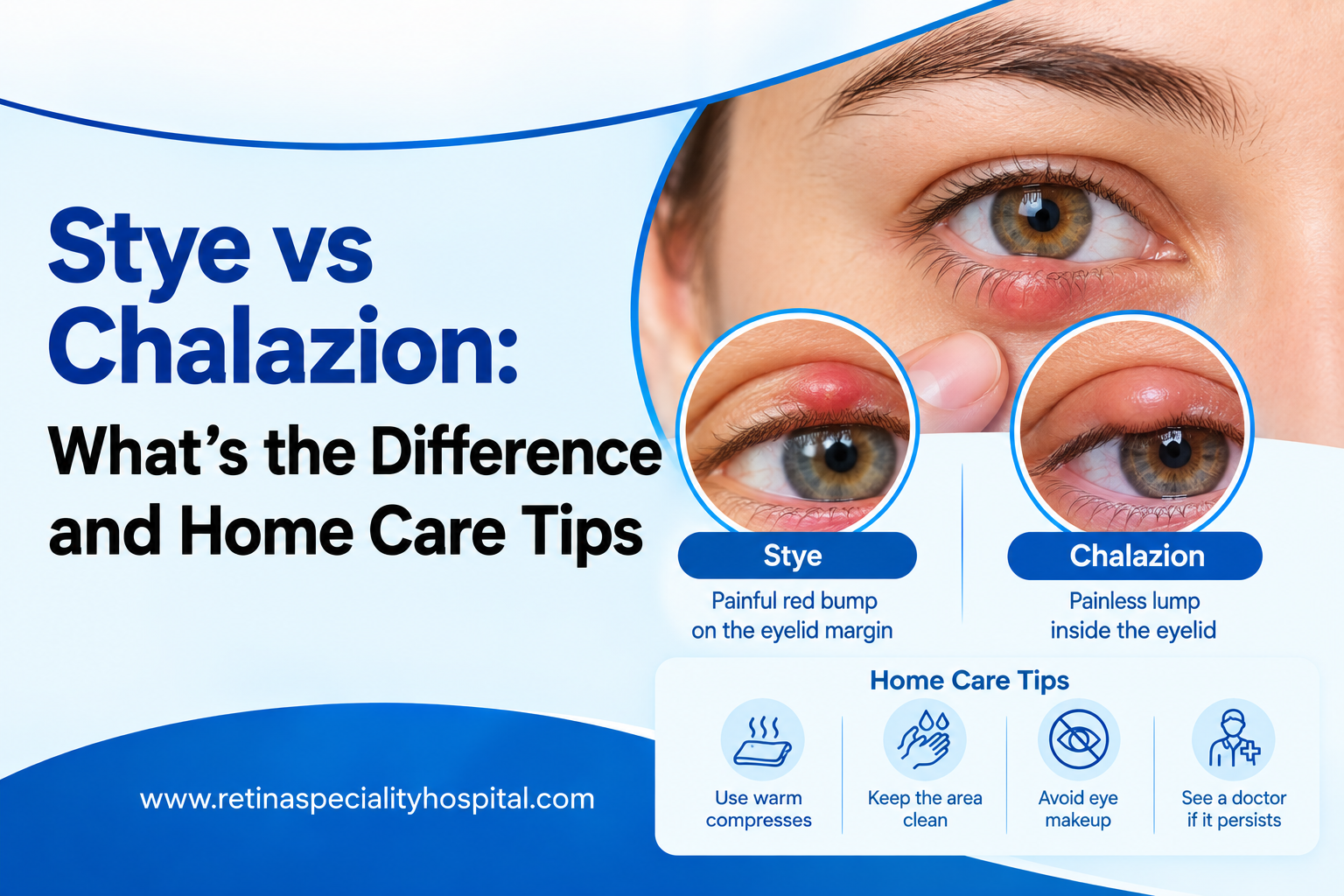
A stye is a painful, infected bump that forms at the edge of your eyelid, while a chalazion is a usually painless bump caused by a blocked oil gland farther back on the eyelid. Both are common, harmless in most cases, and often confused with each other because they look similar in the early stages.
If you’ve noticed a bump on your eyelid and aren’t sure what it is, this guide from Retina Speciality Hospital, a leading eye hospital in Indore, will help you tell the difference and know when to visit the best eye doctor in Indore.
What Is a Stye?
A stye, medically called a hordeolum, is a sudden bacterial infection of an oil gland or an eyelash follicle at the edge of your eyelid. It typically appears quickly and is painful from the very start.
Styes are most often caused by bacteria, especially Staphylococcus species, which cause pus to build up inside the gland. This is what creates the visible, tender lump.
Common symptoms of a stye include:
- A red, swollen, and tender bump at the eyelid margin
- Pain, especially when blinking or touching the area
- A small pus-filled spot at the center
- Watery eyes or mild crusting
- Sensitivity to light in some cases
What Is a Chalazion?
A chalazion is a bump on the eyelid caused by a blocked meibomian (oil) gland. Unlike a stye, it is usually not caused by infection, so it tends to develop more slowly and is generally painless.
A chalazion often forms farther back on the eyelid than a stye and can sometimes develop from an untreated internal stye. Many patients don’t notice a chalazion at first because there’s little to no pain, until it grows large enough to be visible or press on the eye.
Common symptoms of a chalazion include:
- A painless, round bump on the eyelid (usually the upper lid)
- Mild redness or swelling around the bump
- Blurred vision if the chalazion becomes large enough to press on the eye
- Rarely, tenderness if the surrounding area becomes irritated
Stye vs Chalazion: Key Differences at a Glance
| Feature | Stye (Hordeolum) | Chalazion |
| Cause | Bacterial infection | Blocked oil gland, non-infectious |
| Location | Eyelid margin, near eyelashes | Farther back on the eyelid |
| Pain | Painful | Usually painless |
| Onset | Sudden | Gradual |
| Pus | Often present | Usually absent |
| Whole eyelid swelling | More common | Rare |
| Typical healing time | About 1 to 2 weeks | A few weeks to a month |
| Common treatment | Warm compress, antibiotic ointment if needed | Warm compress, massage, steroid injection if persistent |
What Causes These Eyelid Bumps?
Both conditions are related to the tiny oil-producing glands along your eyelid margin, but the underlying mechanism differs:
- Styes occur when bacteria infect an eyelash follicle or oil gland, often linked to touching the eyes with unwashed hands, using old or contaminated eye makeup, or not removing makeup before sleeping
- Chalazia occur when a meibomian gland becomes blocked, sometimes as a result of chronic eyelid inflammation (blepharitis) or as a follow-up to an internal stye that didn’t fully resolve
Neither condition is contagious, meaning you cannot spread a stye or chalazion to another person through casual contact. However, good hand hygiene still helps prevent the bacteria that cause styes from spreading.
How to Treat a Stye or Chalazion at Home
For most mild cases, simple home care is enough:
- Apply a warm compress to the affected eyelid for 10 to 15 minutes, three to four times a day
- Avoid squeezing or popping the bump, as this can worsen infection or spread bacteria
- For a chalazion, a gentle massage after the warm compress can help encourage the blocked gland to drain
- Keep the area clean and avoid wearing eye makeup or contact lenses until it heals
- Use over-the-counter lubricating eye drops if the eye feels irritated
When Should You See an Eye Doctor?
While most styes and chalazia resolve on their own, you should consult the best eye doctor in Indore if you notice:
- The bump doesn’t improve after one to two weeks of home care
- Increasing pain, redness, or swelling that spreads beyond the eyelid
- Vision becomes blurred or affected
- The entire eyelid swells significantly
- You develop styes or chalazia frequently
- Fever accompanies the eyelid swelling, which may indicate a spreading infection
In persistent cases, an eye specialist may recommend a small in-office procedure, such as draining a stubborn stye or giving a steroid injection into a chalazion that hasn’t responded to home care.
Can Children Get Styes and Chalazia?
Yes, both conditions are common in children, especially styes, since kids frequently touch and rub their eyes with unwashed hands. If your child develops a persistent or painful eyelid bump, it’s best to consult a specialist experienced in child eye care in Indore rather than waiting it out, since children are less likely to communicate discomfort clearly.
Why Choose Retina Speciality Hospital for Eyelid Concerns
While a stye or chalazion may seem minor, persistent eyelid problems sometimes need a closer, more experienced evaluation. As one of the trusted names among eye care centre Indore options, our team combines routine eyelid care with comprehensive eye health checks, including retina check up Indore services, so nothing gets missed during your visit.
Key Takeaways
- A stye is a painful, infected bump at the eyelid edge; a chalazion is a usually painless bump from a blocked oil gland
- Both conditions typically heal with warm compresses within one to a few weeks
- Neither is contagious, but good hygiene helps prevent styes
- See an eye doctor if the bump persists beyond two weeks, affects vision, or keeps recurring
- Children can develop both conditions and may need specialized care
FAQs About Stye vs Chalazion
1. Can a stye turn into a chalazion?
Yes. An untreated internal stye can sometimes develop into a chalazion if the gland remains blocked after the infection clears. This is one reason persistent eyelid bumps should be evaluated rather than ignored.
2. Is it safe to pop a stye or chalazion at home?
No. Squeezing or popping either bump can push infection deeper into the eyelid tissue or cause scarring. If drainage is needed, it should always be done by an eye doctor under sterile conditions.
3. How long does a chalazion typically take to heal?
A chalazion usually takes a few weeks to a month to resolve with consistent warm compresses and massage. If it persists beyond this period or continues growing, a doctor may recommend a steroid injection or minor surgical drainage.
4. Are styes and chalazia contagious?
No, neither condition spreads from person to person through casual contact. However, since styes involve bacteria, it’s still wise to avoid sharing towels, pillowcases, or eye makeup.
5. Can a chalazion affect my vision?
A small chalazion typically doesn’t affect vision. However, if it grows large enough to press against the surface of the eye, it can cause temporary blurred vision, which usually improves once the chalazion is treated.
Not sure if that eyelid bump is a stye, a chalazion, or something that needs closer attention? Visit Retina Speciality Hospital, recognized among the best eye hospitals in Indore, for an accurate diagnosis and effective treatment. Book your appointment today and let our specialists take care of your eye health, from minor eyelid concerns to comprehensive retina check ups.