







Can high blood pressure damage your eyes? Yes, it can. Uncontrolled high blood pressure quietly harms the tiny blood vessels in the retina at the back of your eye, a condition called hypertensive retinopathy. Over time this can blur your vision or, in serious cases, threaten your sight.
The tricky part is that this damage is often painless and has no early symptoms. That is why understanding the link between blood pressure and eye health, and getting regular checks with an eye doctor in Indore, is so important for protecting your vision.
Can High Blood Pressure Damage Your Eyes?
Your eyes rely on a fine network of blood vessels to stay healthy. High blood pressure, also known as hypertension, puts extra force on these vessels throughout your body, including the ones in your eyes.
Over months and years, this pressure makes the retinal blood vessels narrow, thicken, or leak. Because the retina depends on a steady blood supply, any damage to these vessels can affect how clearly you see.
In short, high blood pressure does not just strain your heart. It can silently harm your eyes as well, which is why the two should always be managed together.
What Is Hypertensive Retinopathy?
Hypertensive retinopathy is the medical name for eye damage caused by high blood pressure. It develops when raised pressure injures the small blood vessels of the retina.
In the early stages, the vessels simply narrow. As the condition worsens, they may leak fluid or blood, and the retina can swell. In severe cases, the optic nerve at the back of the eye can also be affected.
The good news is that early hypertensive retinopathy often improves once blood pressure is brought under control. This is why early diagnosis by a retina specialist doctor makes such a difference.
Warning Signs and Symptoms to Watch For
One of the biggest dangers of high blood pressure eye damage is that it usually causes no symptoms until it is advanced. Many people feel completely fine while damage is building up.
When symptoms do appear, they may include:
• Blurred or reduced vision
• Double vision
• Headaches with vision changes
• Dark spots or floaters in your sight
• Sudden vision loss in severe cases
Because these signs can appear late, do not wait for symptoms. Anyone with high blood pressure should have regular eye checks at a vision care centre for retina care, even if their sight seems normal.
Eye Conditions Caused by High Blood Pressure
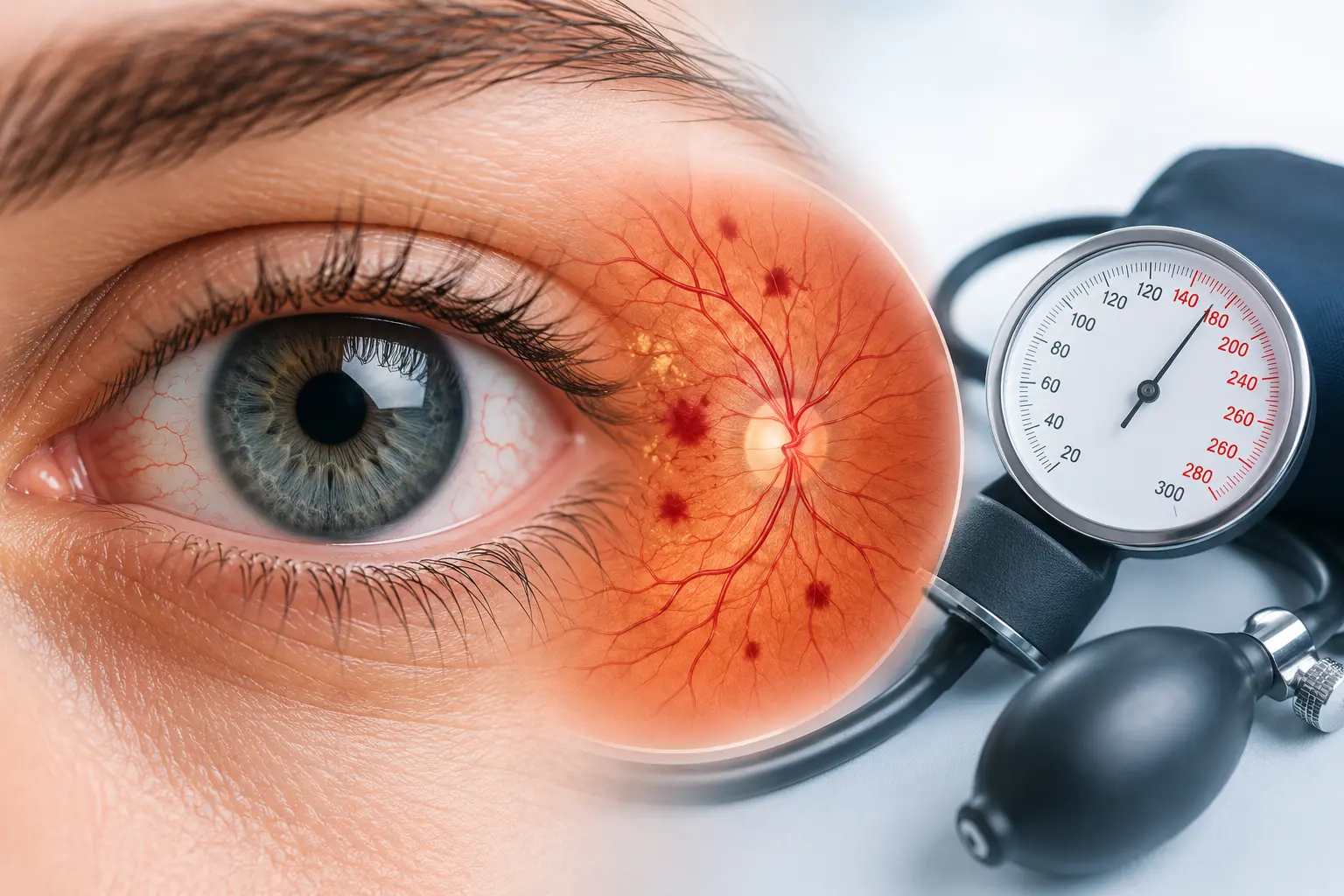
High blood pressure can trigger several serious eye problems, not just hypertensive retinopathy. Each one can affect your vision in a different way.
The table below shows the main conditions linked to high blood pressure.
| Condition | What Happens | Effect on Vision |
| Hypertensive retinopathy | Retinal vessels narrow, leak, or bleed | Blurred or reduced vision |
| Retinal vein occlusion | A retinal vein becomes blocked | Sudden painless vision loss in one eye |
| Retinal artery occlusion | A retinal artery becomes blocked | Sudden, often severe vision loss |
| Choroidopathy | Fluid builds up under the retina | Distorted or blurred central vision |
| Optic neuropathy | Blood flow to the optic nerve is reduced | Vision loss, sometimes permanent |
Because several of these conditions can cause sudden vision loss, any rapid change in your sight should be treated as an emergency and checked by a retina specialist doctor at once.
Who Is at Risk of High Blood Pressure Eye Damage?
Anyone with high blood pressure can develop eye damage, but some people face a higher risk. Knowing your risk helps you take action sooner.
You may be at greater risk if you:
• Have had high blood pressure for many years
• Do not take your blood pressure medicine regularly
• Also live with diabetes, which harms the retina too
• Smoke or are overweight
• Eat a high-salt diet or have high cholesterol
• Have a family history of hypertension or eye disease
If any of these apply to you, a yearly retinal check is a smart step. People with both diabetes and hypertension should be especially careful, as the combined effect on the retina can be significant.
How High Blood Pressure Eye Damage Is Diagnosed and Treated
Diagnosis is simple and painless. During an eye exam, the doctor widens your pupils with drops and examines the retina for narrowed vessels, leaks, or swelling.
Advanced tests give an even clearer picture. These may include:
• Optical Coherence Tomography (OCT), a detailed scan of the retina. See how OCT imaging works.
• Fundus Fluorescein Angiography (FFA), which maps blood flow and leaks in the retinal vessels. Read about fundus fluorescein angiography.
How to Protect Your Eyes from High Blood Pressure
The best defence is prevention. Keeping your blood pressure steady protects both your heart and your eyes at the same time.
Simple, effective steps include:
• Take your blood pressure medicine exactly as prescribed
• Eat a balanced, low-salt diet with plenty of fruit and vegetables
• Exercise regularly and maintain a healthy weight
• Limit alcohol and avoid smoking
• Manage stress and get enough sleep
• Have a comprehensive eye exam at least once a year
Choosing the right hospital matters too. A NABH hospital in Indore with a dedicated retina team gives you accurate diagnosis and expert care under one roof. If you are looking for an Indore best eye hospital or a top eye hospital in Indore, pick one where an experienced eye doctor in Indore and retina specialists work together to protect your sight.
Quick Checklist: Protect Your Eyes If You Have High Blood Pressure
• Keep your blood pressure within your target range
• Take all medicines regularly, without skipping doses
• Book a dilated retinal exam at least once a year
• Report any blurred vision, floaters, or vision loss at once
• Manage diabetes and cholesterol alongside blood pressure
If you have high blood pressure and have not had a recent eye check, book one now.
Frequently Asked Questions
1. Can high blood pressure cause permanent eye damage?
Yes, if it is left uncontrolled for a long time. Persistent high blood pressure can permanently damage the retina, block retinal blood vessels, or harm the optic nerve, leading to lasting vision loss. However, when blood pressure is controlled early, much of the damage can be slowed or even reversed, which is why regular checks matter.
2. What are the first signs that high blood pressure is affecting your eyes?
In most cases there are no early signs, which is what makes it dangerous. When symptoms do appear, they may include blurred vision, headaches with vision changes, floaters, or double vision. Because the damage is often silent, people with high blood pressure should have regular eye exams even when their vision feels normal.
3. Can eye damage from high blood pressure be reversed?
Early hypertensive retinopathy can often improve once blood pressure is brought under control. Mild changes in the retinal vessels may settle over time. However, advanced damage, such as bleeding or optic nerve involvement, may be permanent, so early diagnosis and treatment give the best chance of recovery.
Protect Your Vision and Your Health Today
High blood pressure is a silent threat to your eyes, but it is also one you can control. With the right care, you can keep both your vision and your overall health strong.
If you have high blood pressure, do not wait for symptoms to appear. The retina specialists at Retina Speciality Hospital, Indore offer thorough eye checks and advanced treatment to protect your sight. Call 0731-2553377 or book your eye examination today, and give your eyes the expert care they deserve. Meet our retina specialists to get started.