








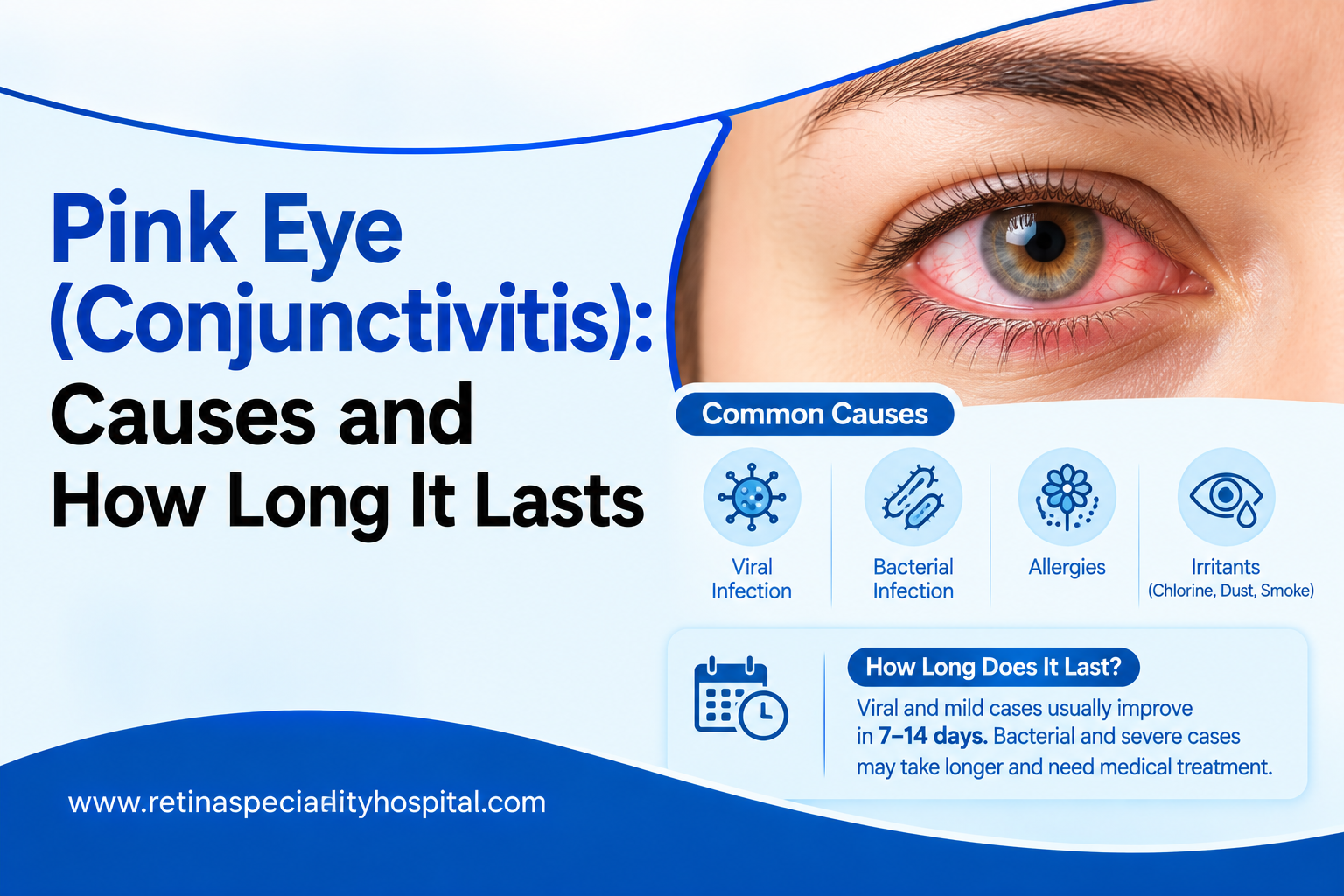
Pink eye, medically known as conjunctivitis, typically lasts anywhere from a few days to two weeks, depending on its cause. Viral conjunctivitis usually clears up on its own in 7 to 14 days, bacterial conjunctivitis improves within 2 to 10 days (faster with antibiotic drops), and allergic conjunctivitis can persist as long as you’re exposed to the allergen.
If your eyes have turned red, watery, or itchy recently, you’re likely searching for a reliable pink eye doctor near me. This guide from Retina Speciality Hospital, a trusted eye hospital in Indore, explains exactly what causes conjunctivitis, how long each type lasts, and when it’s time to see a specialist.
What Is Pink Eye (Conjunctivitis)?
Conjunctivitis is inflammation of the conjunctiva, the thin, clear membrane that covers the white part of your eye and lines the inside of your eyelid. When this membrane becomes inflamed, tiny blood vessels become more visible, giving the eye its characteristic pink or red appearance.
Pink eye can affect one or both eyes and can be short-term (acute) or, less commonly, long-lasting (chronic). It’s one of the most common reasons people search for a conjunctivitis doctor near me, especially during monsoon and early winter months when infections spread more easily.
What Causes Pink Eye?
Conjunctivitis has three main causes, and identifying which one you have determines both the treatment and how long it will last.
1. Viral Conjunctivitis
The most common cause of pink eye, usually triggered by adenoviruses, and often accompanies a cold or respiratory infection. It is highly contagious and typically starts in one eye before spreading to the other within a day or two.
2. Bacterial Conjunctivitis
Caused by bacteria such as Staphylococcus or Streptococcus. It often produces thick yellow or green discharge and is more common in children. It spreads through direct contact, contaminated hands, or shared personal items.
3. Allergic Conjunctivitis
Triggered by allergens like pollen, dust, or pet dander. Unlike viral and bacterial pink eye, this type is not contagious and usually affects both eyes with intense itching as the main symptom.
Other, less common causes include irritation from smoke, chemicals, chlorine, or improper contact lens use.
How Long Does Pink Eye Last?
This is the most common question patients ask, and the honest answer is: it depends on the cause.
| Type of Conjunctivitis | Typical Duration | Contagious? |
| Viral | 7 to 14 days (sometimes up to 3 weeks) | Yes, highly |
| Bacterial (untreated) | Up to 10 days | Yes |
| Bacterial (with antibiotic drops) | Improves within 24 to 48 hours | Yes, until treated |
| Allergic | As long as exposed to allergen | No |
| Irritant-related | A few hours to a couple of days once irritant is removed | No |
Viral pink eye, much like a common cold, generally has to run its course. Symptoms often get worse over the first three to five days before gradually improving.
Symptoms of Pink Eye
While symptoms vary slightly by cause, common signs of conjunctivitis include:
- Redness in the white of the eye or inner eyelid
- Watery or thick discharge, which may crust eyelids overnight
- Itching or a gritty, burning sensation
- Swollen eyelids
- Mild sensitivity to light
- Blurred vision in some cases
When Should You See an Eye Doctor for Pink Eye?
While most cases of pink eye are mild and improve on their own, you should visit a pink eye clinic in Indore promptly if you notice:
- Eye pain, not just irritation
- Reduced or blurred vision
- Significant sensitivity to light
- Symptoms that worsen or don’t improve after a few days
- Thick discharge that keeps returning throughout the day
- Symptoms in a newborn or infant, which need immediate medical attention
Contact lens wearers should also stop using their lenses immediately and consult an eye specialist in Indore if symptoms continue 12 to 24 hours after removing them.
How Is Conjunctivitis Treated?
Treatment depends entirely on the underlying cause:
- Viral conjunctivitis: No specific cure; cold compresses and lubricating eye drops help manage discomfort while the infection runs its course
- Bacterial conjunctivitis: Antibiotic eye drops or ointment prescribed by your doctor, which usually speeds up recovery and reduces the risk of spreading it to others
- Allergic conjunctivitis: Avoiding the allergen along with anti-allergy eye drops or oral antihistamines
- Irritant-related conjunctivitis: Flushing the eye with clean water and removing the source of irritation
Never use leftover antibiotic drops from a previous infection or share eye drops with family members, as this can worsen the condition or spread infection.
How to Prevent Pink Eye From Spreading
Since viral and bacterial conjunctivitis are highly contagious, simple hygiene steps go a long way:
- Wash your hands frequently, especially after touching your eyes
- Avoid sharing towels, pillowcases, or eye makeup
- Don’t touch or rub your eyes with unwashed hands
- Clean and replace contact lenses as recommended
- Disinfect frequently touched surfaces if a family member is infected
Key Takeaways
- Pink eye is usually caused by viruses, bacteria, or allergens
- Viral conjunctivitis lasts about 7 to 14 days; bacterial conjunctivitis improves faster with antibiotic drops
- Allergic conjunctivitis is not contagious and lasts as long as allergen exposure continues
- See a doctor if you have eye pain, blurred vision, light sensitivity, or symptoms that worsen
- Good hygiene is the most effective way to prevent the infection from spreading
FAQs About Pink Eye Causes and How Long It Lasts
1. Is pink eye contagious even without discharge?
Yes. Viral and bacterial conjunctivitis are contagious as long as symptoms like redness, tearing, or crusting are present, even if visible discharge has reduced. It’s best to avoid close contact until symptoms fully resolve.
2. Can pink eye go away on its own without treatment?
Mild viral and bacterial conjunctivitis often improve on their own within one to two weeks. However, an eye doctor’s evaluation is recommended to confirm the cause and rule out more serious conditions, especially if symptoms are severe.
3. Can I go to work or school with pink eye?
It depends on the cause and your workplace or school policy. Since viral and bacterial conjunctivitis are contagious, many people choose to stay home until symptoms noticeably improve, particularly if there’s active discharge or a fever.
4. Does pink eye affect vision permanently?
In most cases, no. Pink eye typically resolves without any lasting effect on vision. However, certain severe viral infections like epidemic keratoconjunctivitis can occasionally cause temporary blurred vision or, rarely, corneal involvement, which is why prompt treatment matters.
5. What is the fastest way to treat pink eye at home?
Cold compresses, artificial tears, and good hygiene can ease discomfort for viral or irritant-related pink eye. However, if you suspect a bacterial infection or your symptoms are worsening, it’s best to consult an eye doctor near you rather than self-medicating.
Dealing with red, itchy, or watery eyes that won’t settle down? Visit Retina Speciality Hospital, a trusted eye hospital in Indore, for fast and accurate conjunctivitis treatment. Our eye specialists identify the exact cause of your pink eye and recommend the right treatment so you recover quickly and safely.