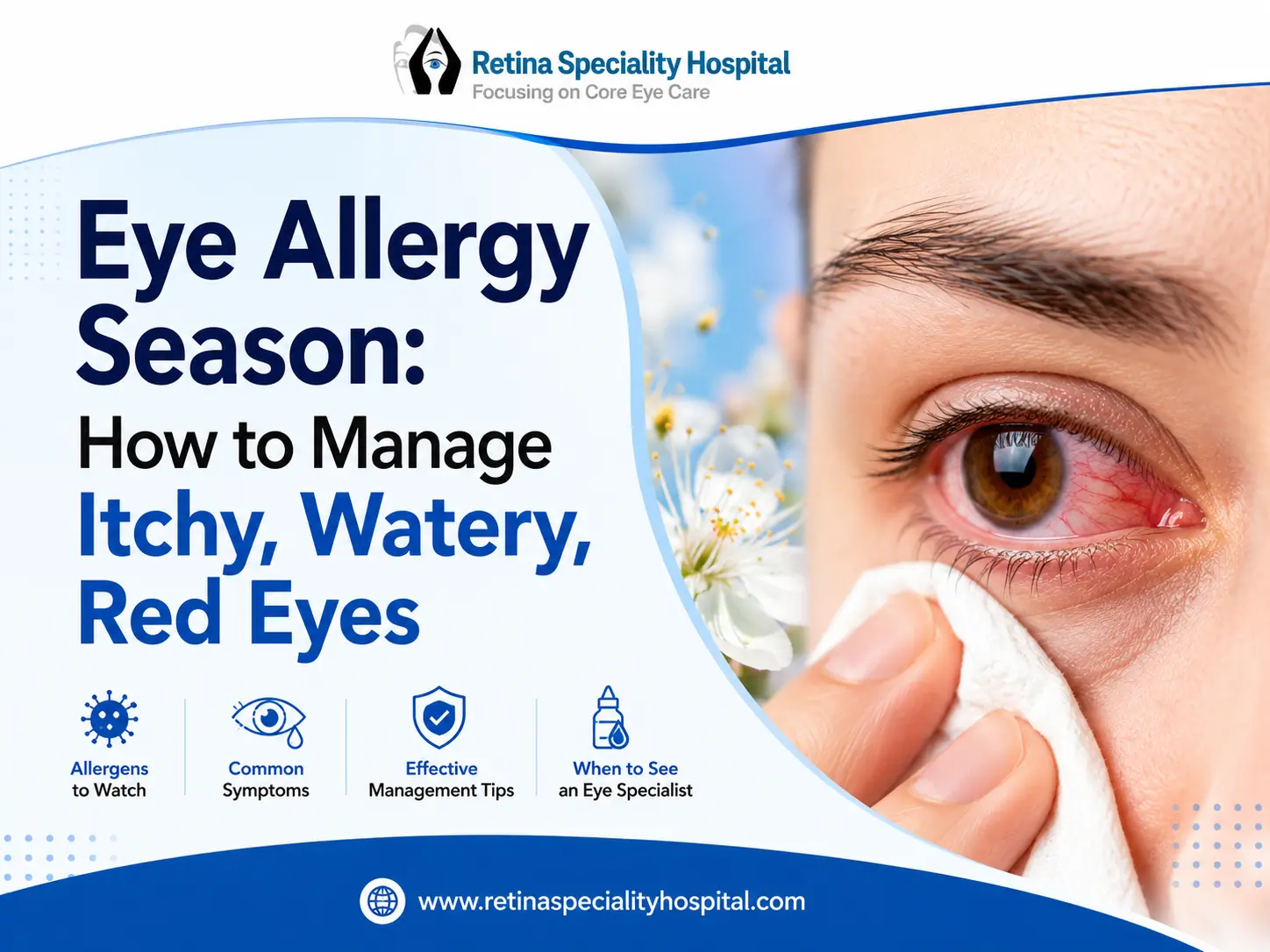









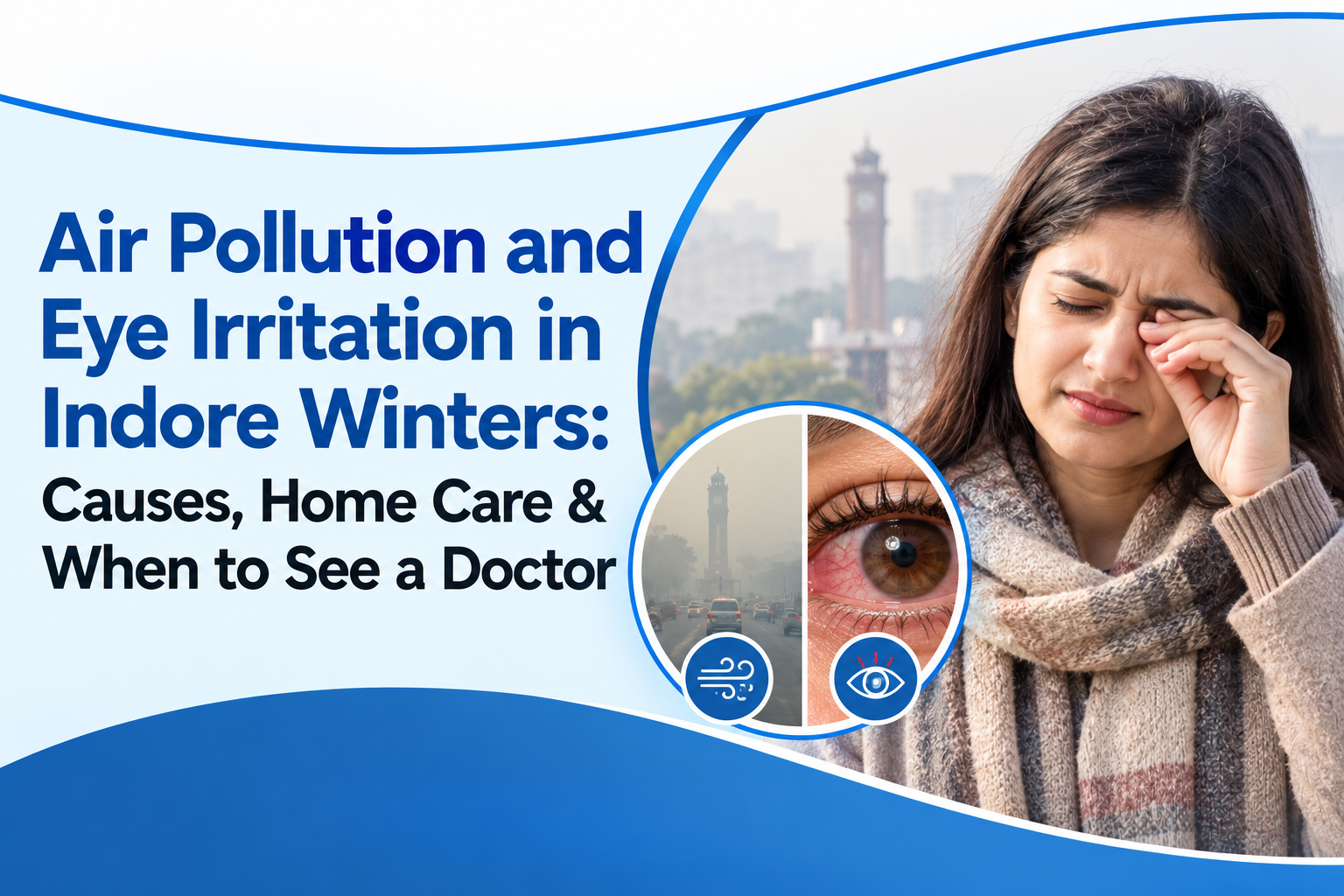
Yes, air pollution can irritate your eyes, and it often gets worse in winter. Cold, dry air, dust, smoke, and fine particles (PM2.5 and PM10) disturb the thin tear film that protects the eye. This causes redness, burning, itching, watering, and a gritty feeling. Most cases settle with simple care: rinse your face, use lubricating eye drops, avoid rubbing, and wear protective eyewear. See an eye doctor if symptoms last more than a few days or if you have pain or vision changes.
Why Do Eyes Get Irritated in Indore Winters?
Indore is often praised for cleanliness, but winter can still bring poorer air. Cooler weather and calm winds can trap dust and smoke close to the ground, and traffic, construction dust, waste burning, and festival fireworks add to it.
Three things combine to bother the eyes:
• Pollutants: fine particles, smoke, dust, and gases touch the surface of the eye
• Dry winter air: low humidity makes tears evaporate faster
• Indoor heating and screens: room heaters and long screen hours reduce blinking and dry the eyes further
How Does Air Pollution Affect the Eyes?
The front of the eye is exposed all day. A healthy tear film washes away dust and keeps the surface smooth. Pollution can:
• Irritate the cornea and conjunctiva (the clear covering of the white part)
• Break up the tear film so tears dry quickly
• Trigger allergic reactions
• Carry germs and allergens that cause infection or inflammation
The result is discomfort that may feel like sand in the eye.
Common Eye Problems in Winter Pollution
| Problem | What you may feel | Usual care |
| Dry eye | Burning, gritty feeling, watering, tired eyes | Lubricating drops, lid care, humidity, doctor review |
| Allergic conjunctivitis | Itching, redness, watery discharge, puffy lids | Avoid allergens, cold compress, doctor-advised allergy drops |
| Irritant (chemical) conjunctivitis | Redness and burning after smoke or dust exposure | Rinse, lubricants, doctor check if it persists |
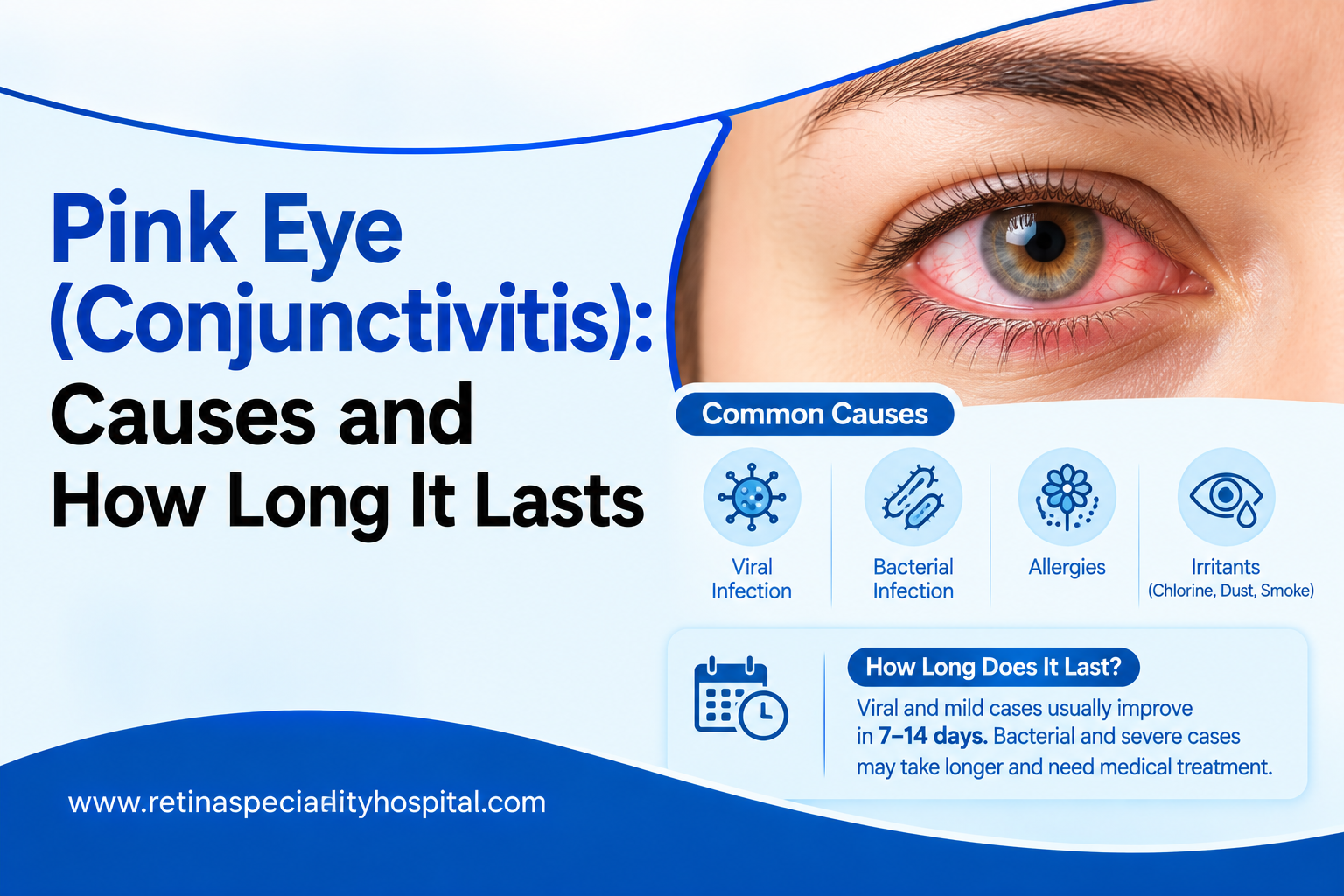
| Infective conjunctivitis | Redness, sticky discharge, often spreads | Doctor-prescribed treatment and hygiene |
| Blepharitis flare-up | Itchy, crusty, red eyelid edges | Lid hygiene, doctor advice |
| Contact lens discomfort | Dryness, redness, lens feels uncomfortable | Switch to glasses, doctor check |
It can be hard to tell these apart at home, so persistent symptoms deserve an eye exam.
Symptoms of Pollution-Related Eye Irritation
1. Redness
2. Burning or stinging
3. Itching
4. Watering or, sometimes, a dry feeling
5. Gritty or “something in the eye” sensation
6. Light sensitivity
7. Swollen or heavy eyelids
8. Mild, temporary blurring that clears on blinking
Who Is at Higher Risk?
1. People who already have dry eye or eye allergies
2. Contact lens wearers
3. Children and older adults
4. People with asthma or other allergiesTwo-wheeler commuters and outdoor workers
5. People who spend long hours on screens
6. Those who have recently had eye surgery (such as cataract or LASIK), who should follow their surgeon’s advice
7. People with diabetes, whose tear quality and healing can be affected
The 4-Step Winter Eye Routine: Rinse, Lubricate, Shield, Rest
Use this simple routine on days when the air is smoky or dusty.
1. Rinse: After coming home, wash your face and gently clean the eyelids with clean water. Wash your hands first.
2. Lubricate: Use preservative-free lubricating eye drops as advised by your doctor, especially if your eyes feel dry.
3. Shield: Wear wraparound sunglasses or protective glasses outdoors. On a two-wheeler, use a helmet visor.
4. Rest: Follow the 20-20-20 rule on screens: every 20 minutes, look at something 20 feet away for 20 seconds. Blink fully and often.
Home Care Tips for Irritated Eyes
Do:
• Keep your hands clean and avoid touching your eyes
• Use a clean cold compress for itching and swelling
• Use a humidifier or keep a bowl of water in a heated room
• Drink enough water
• Keep windows closed during peak pollution hours and clean bedding and curtains regularly
• Switch to glasses if your contact lenses feel uncomfortable
Do not:
• Rub your eyes, as this can scratch the cornea and worsen irritation
• Use steroid or “quick relief” eye drops from a medical shop without a prescription
• Use home remedies such as rose water, turmeric, or milk in the eyes
• Share towels, eye drops, or makeup
• Wear contact lenses for long hours on high-pollution days
When Should You See an Eye Doctor?
Get your eyes checked if you notice:
• ✅ Symptoms lasting more than 2 to 3 days despite home care
• ✅ Eye pain or strong light sensitivity
• ✅ Reduced or blurred vision that does not clear
• ✅ Thick, yellow, or green discharge
• ✅ Redness with pain, especially in a contact lens wearer
• ✅ Swelling of the eyelids or face
• ✅ Irritation in a child that keeps coming back
Sudden vision loss or a painful red eye needs urgent care.
How Do Doctors Treat Pollution-Related Eye Problems?
After examining your eyes, an eye doctor in indore may advise:
• Lubricating drops or gels suited to your type of dry eye
• Anti-allergy or anti-inflammatory drops where needed
• Antibiotic treatment only if there is an infection
• Eyelid cleaning and warm compresses for blepharitis
• Advice on contact lens use and eyewear
• Treatment of any underlying cornea or surface problem
Right treatment matters. The wrong drops, especially steroids, can cause complications.
Where to Get Eye Care in Indore
If irritation keeps returning, look for an eye hospital in Indore that offers a full eye examination, including a tear film and cornea check. When searching for the best eye doctor in Indore or an eye care centre in Indore, check that the doctor explains the cause, avoids unnecessary drops, and plans follow-up.
Retina Speciality Hospital, Indore, offers eye care for surface and cornea problems, cataract, glaucoma, and retina conditions. [Confirm the services and facilities with the hospital before publishing.]
Meet Our Eye Doctor
Dr. Ritu Verma
Senior Consultant, Cataract, Refractive & Cornea Surgeon | MBBS, DOMS (Ophthalmology)
Specialities: Cataract & IOL Surgery, LASIK (Refractive Surgery), Cornea, Conjunctivitis
Her experience with the cornea and conjunctivitis is relevant to red, irritated, and watery eyes caused by pollution and allergy.
Book Appointment with Dr. Ritu Verma
FAQs About Air Pollution and Eye Irritation in Indore Winters
1. Can air pollution cause eye irritation?
Yes. Dust, smoke, and fine particles can irritate the eye surface and disturb the tear film, causing redness, burning, and watering.
2. Why do my eyes burn more in winter in Indore?
Cold, dry air makes tears evaporate faster, and pollution and indoor heating add to the dryness and irritation.
3. Is red eye in winter always an infection?
No. It can be dryness, allergy, or irritation. Sticky discharge or pain may suggest infection, so see a doctor if unsure.
4. Are eye drops safe to use daily?
Preservative-free lubricating drops are commonly used, but ask your doctor which drops suit you. Avoid steroid drops without a prescription.
5. Does wearing sunglasses help against pollution?
Wraparound sunglasses or protective glasses reduce dust and wind reaching the eyes, which helps.
6. Should I stop wearing contact lenses in polluted weather?
If your eyes feel dry, red, or uncomfortable, switch to glasses and see your doctor if symptoms persist.
7. Can pollution cause permanent eye damage?
Most irritation is temporary. Repeated or untreated problems, or infections, can affect the cornea, so persistent symptoms need an exam.
8. Is pollution-related eye irritation contagious?
Irritation and dryness are not contagious, but infective conjunctivitis is. Keep towels and hands clean.
9. How can I protect my child’s eyes in winter?
Keep them from rubbing their eyes, wash hands and face after outdoor play, and take them to an eye doctor if irritation keeps returning.
10. Which eye hospital in Indore should I visit for repeated eye irritation?
Choose a hospital with experienced eye doctors and a complete eye examination, such as Retina Speciality Hospital, Indore, where Dr. Ritu Verma treats cornea and conjunctivitis problems.
Conclusion
Winter air pollution in Indore can make eyes red, dry, and uncomfortable. Simple habits such as rinsing, lubricating, shielding, and resting your eyes go a long way. Do not rub your eyes or use medical-shop drops on your own, and get checked if the problem does not settle in a few days.
Book Your Eye Check-Up Today
If your eyes keep burning, itching, or watering, consult Dr. Ritu Verma at Retina Speciality Hospital, Indore. Call [Phone Number] or [Book an Appointment] now.