







Foods rich in vitamin C, vitamin E, lutein, zeaxanthin, and omega-3 fatty acids like leafy greens, citrus fruits, nuts, and fish help slow cataract formation, while sugary, fried, and processed foods speed it up. At Retina Speciality Hospital, recognized as one of the best eye hospitals in Indore, our retina specialists combine diet guidance with expert retina treatment for better long-term vision outcomes. Whether you’re searching for a retina specialist in Indore or simply looking for an eye hospital near you in Indore, the right diet is a great place to start alongside professional care.
Understanding Cataracts and the Role of Diet
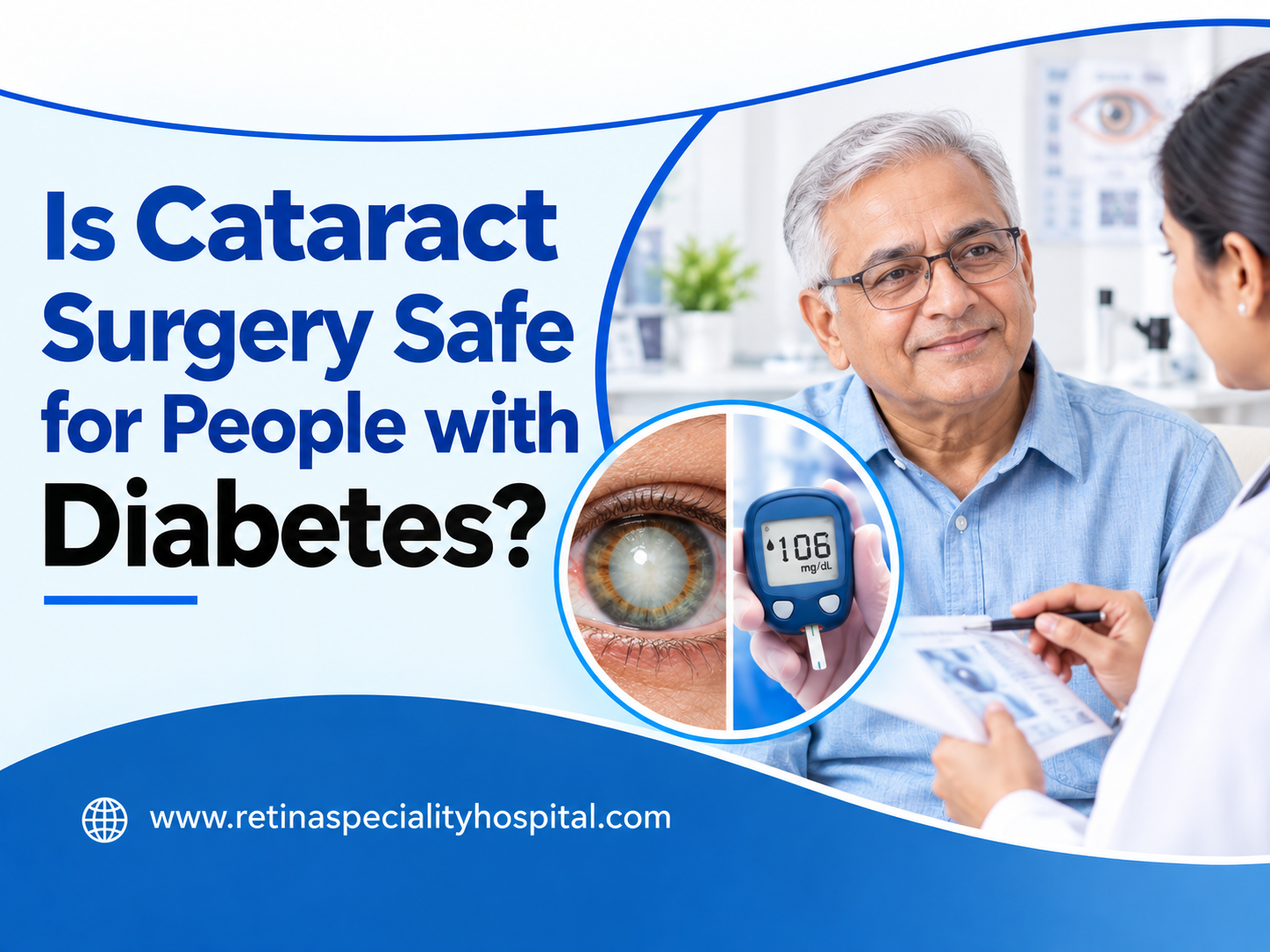
Cataracts occur when the eye’s lens becomes cloudy, blurring vision. Age, UV exposure, smoking, and poor diet all raise your risk. While diet alone can’t prevent cataracts entirely, research shows it plays a measurable role: a 2019 study in the American Journal of Clinical Nutrition found that adding 10 mg of carotenoids to the diet lowered cataract risk by 26%. Larger studies, including the UK Biobank cohort, also linked higher intake of fruits, vegetables, legumes, tomatoes, apples, and pears to a meaningfully lower cataract risk.
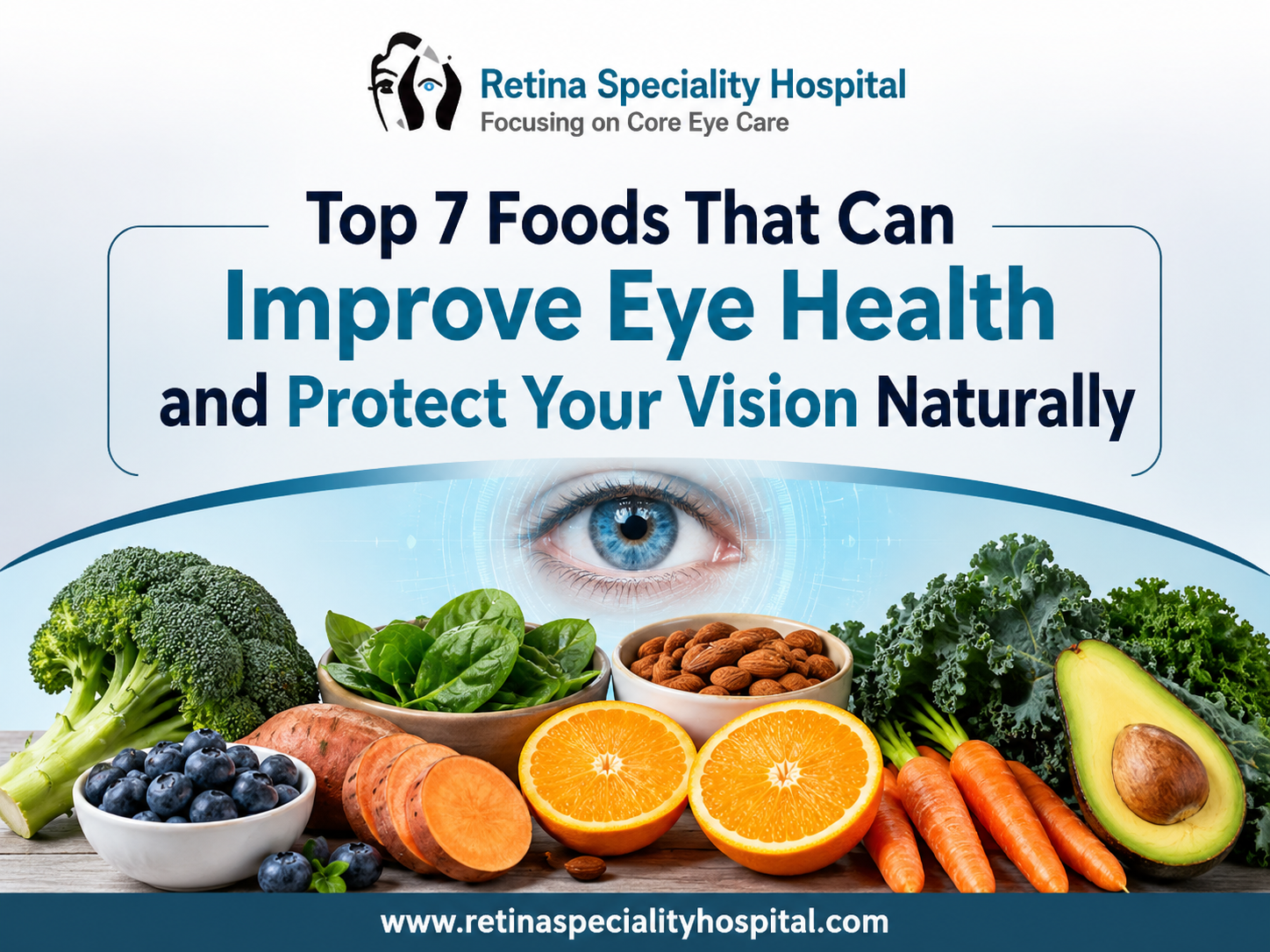
10 Best Foods for Cataract Prevention
| Food | Key Nutrient | How It Helps |
| Leafy greens (spinach, kale) | Lutein, zeaxanthin | Filters damaging light, protects retina |
| Carrots | Beta-carotene (Vitamin A) | Supports low-light vision |
| Citrus fruits | Vitamin C | Protects lens from oxidative damage |
| Nuts & seeds | Vitamin E, omega-3 | Shields eye cells from damage |
| Fatty fish (salmon, mackerel) | Omega-3 (DHA) | Supports retinal function |
| Eggs | Lutein, zeaxanthin, zinc | Aids night vision, reduces oxidative stress |
| Sweet potatoes | Beta-carotene | Same benefits as carrots |
| Bell peppers | Vitamin C, flavonoids | Protects against age-related eye disease |
| Berries | Antioxidants, Vitamin C | Delays cataract formation |
| Whole grains | Fiber, Vitamin E | Stabilizes blood sugar, protects eyes indirectly |
Daily target: 5–9 servings of fruits and vegetables, 3 servings of whole grains, and 2 servings of fish per week.
Foods to Avoid If You Have Cataracts or Want to Prevent Them
This is the part most guides skip but what you avoid matters as much as what you eat.
- Sugary foods and drinks high sugar intake damages lens proteins through a process called glycation, which speeds up cataract formation. Avoid candies, desserts, and sodas.
- Fried and high-fat foods trans fats and oxidized oils in fried foods cause oxidative stress that damages lens proteins. Limit deep-fried snacks and fast food.
- Refined carbohydrates eating large amounts of carbohydrates is linked to a higher risk of cataract progression. Cut back on white bread and pastries.
- Excess red and processed meat high in saturated fat and preservatives, which increase inflammation.
- Excess alcohol dehydrates the body and interferes with absorption of protective antioxidants like vitamins C and E.
Diet for Cataract Patients: Recovery After Surgery
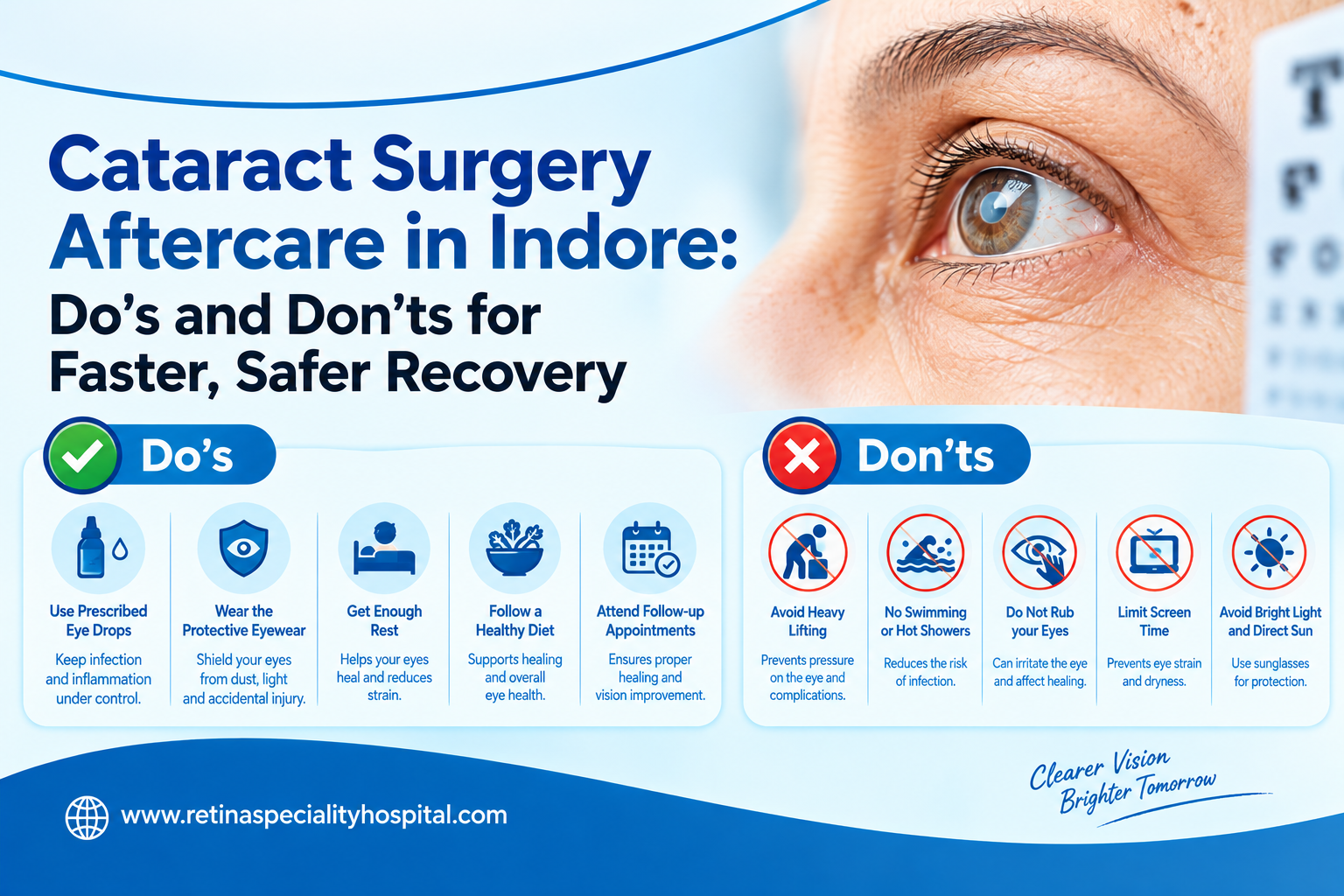
If you’re recovering from cataract surgery, your diet should focus on healing and reducing inflammation:
- Protein-rich foods (eggs, fish, legumes) support tissue repair.
- Vitamin C and zinc speed up wound healing at the incision site.
- Anti-inflammatory foods (leafy greens, berries, fatty fish) reduce post-surgery swelling.
- Stay well hydrated and avoid alcohol for at least a few days post-surgery, as advised by your surgeon.
- Continue the prevention diet above to protect your other eye and slow future cataract development.
Always follow your specific post-op diet instructions from your retina specialist doctor, as individual recovery needs vary.
मोतियाबिंद में क्या खाना चाहिए?
मोतियाबिंद (cataract) से बचाव और रिकवरी के लिए डाइट में शामिल करें:
- हरी पत्तेदार सब्जियां (पालक, मेथी) आंखों को ऑक्सीडेटिव डैमेज से बचाती हैं।
- खट्टे फल (संतरा, नींबू) विटामिन C से आंखों के लेंस को सुरक्षा मिलती है।
- गाजर और शकरकंद विटामिन A से रात में देखने की क्षमता बेहतर होती है।
- मछली और अखरोट ओमेगा-3 से रेटिना स्वस्थ रहता है।
क्या न खाएं: ज्यादा चीनी, तला-भुना खाना, और रिफाइंड कार्ब्स से बचें ये मोतियाबिंद बढ़ने की गति तेज कर सकते हैं।
Why Choose Retina Speciality Hospital for Eye Care in Indore
Diet supports eye health, but nothing replaces expert diagnosis and care. As a trusted eye care centre in Indore, Retina Speciality Hospital offers:
- Comprehensive retina check-ups in Indore using advanced diagnostic equipment.
- Experienced retina specialists in Indore for cataract, diabetic retinopathy, and macular conditions.
- One of the few centres offering dedicated child eye care in Indore, catching vision issues early.
- Personalized treatment plans from some of the best eye doctors in Indore.
If you’re comparing options for the best eye hospital in Indore, look for a centre that combines retina expertise with preventive guidance not just surgery.
Lifestyle Tips to Complement Your Diet
- Wear UV-protective sunglasses outdoors.
- Avoid smoking it accelerates cataract formation.
- Get annual eye checkups at a trusted eye hospital in Indore.
- Manage blood sugar and blood pressure, both linked to eye health.
- Get annual eye checkups at a reputed eye care hospital in Indore early detection makes cataract management far easier.
FAQs About Foods for Eye Health
Q1: Can diet alone prevent cataracts?
No diet reduces risk and supports eye health, but doesn’t guarantee prevention. Regular checkups remain essential.
Q2: What foods should I avoid if I have a cataract?
Limit sugary foods, fried items, refined carbs, processed meats, and excess alcohol all linked to faster lens damage.
Q3: What should I eat after cataract surgery?
Focus on protein, vitamin C, zinc, and anti-inflammatory foods like leafy greens and fish to support healing.
Q4: मोतियाबिंद में परहेज क्या है?
ज्यादा मीठा, तला हुआ और प्रोसेस्ड खाना मोतियाबिंद बढ़ने की गति तेज कर सकता है, इसलिए इनसे बचना चाहिए।
Q5: How much vitamin C do I need daily for eye protection?
Adults should aim for 75–90 mg daily through citrus fruits, bell peppers, and berries.
Q6: How often should I get a retina checkup?
Annually for most adults; more often if you’re at higher cataract risk
Q7: Where can I get a reliable retina check-up in Indore?
Retina Speciality Hospital offers comprehensive retina check-ups in Indore using advanced imaging to detect cataracts and other retinal conditions early.
Q8: Does Retina Speciality Hospital offer child eye care in Indore?
Yes we provide dedicated child eye care in Indore, including early screening for vision problems that can affect long-term eye health.
Key Takeaways
- Prevention diet: leafy greens, citrus, nuts, fish, eggs, sweet potatoes, bell peppers, berries, whole grains.
- Avoid list: sugar, fried food, refined carbs, processed meat, excess alcohol.
- Recovery diet: protein, vitamin C, zinc, anti-inflammatory foods.
- Combine diet with UV protection, no smoking, and regular checkups.
Conclusion
Managing cataract risk isn’t just about adding the right foods avoiding the wrong ones matters just as much. Whether you’re preventing cataracts, managing an existing one, or recovering from surgery, the right diet supports better outcomes at every stage. And when it’s time for a professional check-up, choosing the best eye hospital in Indore makes all the difference.
Take action today: Book a consultation with our retina specialist doctor recognized among the best eye doctors in Indore at Retina Speciality Hospital for personalized diet and treatment guidance.