








Is laser eye surgery safe? Yes, for the right candidate treated by an experienced surgeon, modern laser eye surgery (LASIK, SMILE and PRK) is considered safe and effective. More than 95% of patients report satisfaction with their results. However, no medical procedure is 100% risk-free, so understanding the risks, side effects and eligibility is essential before you decide.
This guide answers the most common patient questions: is eye laser treatment safe, what are the LASIK surgery side effects, who is eligible, how to get LASIK cost details, and how to choose the right eye hospital in Indore.
Is Eye Laser Treatment Safe? The Short Answer
Laser treatment for eyes is safe when three things come together: the right candidate, modern technology and an experienced surgeon.
- LASIK has been practised for over 25 years, with millions of procedures done worldwide.
- Most patients achieve 20/20 vision or better.
- Side effects such as dryness or halos are usually temporary and settle within weeks to a few months.
- Serious complications are rare when screening and aftercare are done properly.
At Retina Speciality Hospital, Indore, every patient goes through a detailed pre-surgical evaluation before being advised for laser vision correction.
What Does “Laser Eye Surgery 100% Safe” Mean?
When patients ask whether laser surgery is 100% safe, they usually want to know:
- Will it guarantee perfect vision with no risk?
- Can there be side effects or complications?
- How reliable are the results in the long term?
Honest answer: no surgery can be called 100% risk-free. But corrective laser eye surgery in indore is one of the most widely performed and best-studied procedures in ophthalmology, and it is considered safe when done by experienced surgeons in a trusted hospital using the latest technology.
How Safe Is LASIK Surgery Really?
Is LASIK surgery safe? Studies worldwide report that more than 95% of patients are satisfied with their outcome, and many no longer need glasses or contact lenses for daily activities.
Safety comes from precision. Modern bladeless (femtosecond) lasers and wavefront-guided systems allow customised treatment for each eye. At Retina Speciality Hospital, we use FDA-approved laser systems and standard safety protocols for every procedure.
Why laser eye surgery is considered safe
- Proven technology: Over 25 years of clinical use.
- High success rate: Millions of successful procedures globally.
- Quick recovery: Most patients see better within 24 hours.
- Personalised treatment: Each procedure is planned using your corneal scans and prescription.
Types of Corrective Laser Eye Surgery
Corrective laser eye surgery is not a single procedure. Your surgeon recommends one based on your cornea and prescription.
| Procedure | How it works | Best suited for |
| LASIK | Thin corneal flap is created, then the cornea is reshaped | Most stable prescriptions with adequate corneal thickness |
| SMILE | Small incision, no flap; a tiny lens-shaped piece is removed | Myopia patients, active lifestyles |
| PRK | Surface treatment, no flap | Thinner corneas, contact-sport lovers |
Your surgeon will explain which option is safest for you after your eye tests.
Factors That Affect Laser Eye Surgery Safety
1. Patient eligibility
Not everyone is a good candidate. Very thin corneas, severe dry eyes, unstable prescription or uncontrolled diabetes can raise risk. A detailed eye check-up at a reputed eye hospital in Indore confirms whether you qualify.
2. Technology used
Femtosecond lasers, wavefront-guided and topography-guided systems improve accuracy and safety. Older equipment may not offer the same precision.
3. Surgeon’s experience
An experienced refractive surgeon makes better decisions on candidacy, technique and aftercare. Ask how many procedures the surgeon has performed.
4. Post-surgery care
Using prescribed drops, avoiding rubbing your eyes, keeping dust and water away and attending all follow-up visits significantly lowers complications.
LASIK Surgery Side Effects and Risks
What are the LASIK surgery side effects? Most are mild and temporary.
| Side effect | How common | Usual duration |
| Dry eyes | Common | Weeks to a few months |
| Glare or halos at night | Common early on | Weeks to months |
| Temporary blurry vision | Common | Days to weeks |
| Light sensitivity | Common | Days to weeks |
| Under- or over-correction | Uncommon | May need an enhancement |
| Infection or flap complications | Rare | Treatable when detected early |
These risks are minimised by proper screening, an experienced surgeon and following post-operative instructions. Contact Eye doctor in indore immediately if you notice worsening pain, redness or sudden drop in vision.
Common Myths About Laser Eye Surgery Safety
Myth 1: Laser surgery is painful. Fact: Anaesthetic eye drops make the procedure virtually painless. You may feel slight pressure.
Myth 2: Results are temporary. Fact: For most patients results are long-lasting. A small number may need an enhancement, and age-related reading problems (presbyopia) can still develop later.
Myth 3: Laser damages the eye. Fact: Modern lasers reshape the cornea with high precision. The risk is low when the patient is properly screened.
Myth 4: Everyone can get it done. Fact: Eligibility depends on corneal thickness, prescription stability and overall eye health.
Benefits of Laser Eye Surgery
- Freedom from glasses and contact lenses
- Quick recovery with minimal downtime
- Better confidence and lifestyle
- Clear vision for driving, reading and sports
- Long-lasting results for most patients
LASIK Eye Surgery Cost in India
The cost of LASIK eye surgery in India differs from patient to patient. It depends on your eye condition, the procedure advised and the technology recommended after your evaluation. For accurate cost details, please contact Retina Speciality Hospital, Indore directly. Our team will guide you after your eye check-up.
Laser Cataract Surgery: Is It Different?
People often confuse vision-correction lasers with laser cataract surgery in indore . They are different treatments:
- LASIK/SMILE/PRK correct refractive errors (myopia, hyperopia, astigmatism).
- Laser cataract surgery (femtosecond laser-assisted) uses a laser for certain steps of cataract removal and lens replacement.
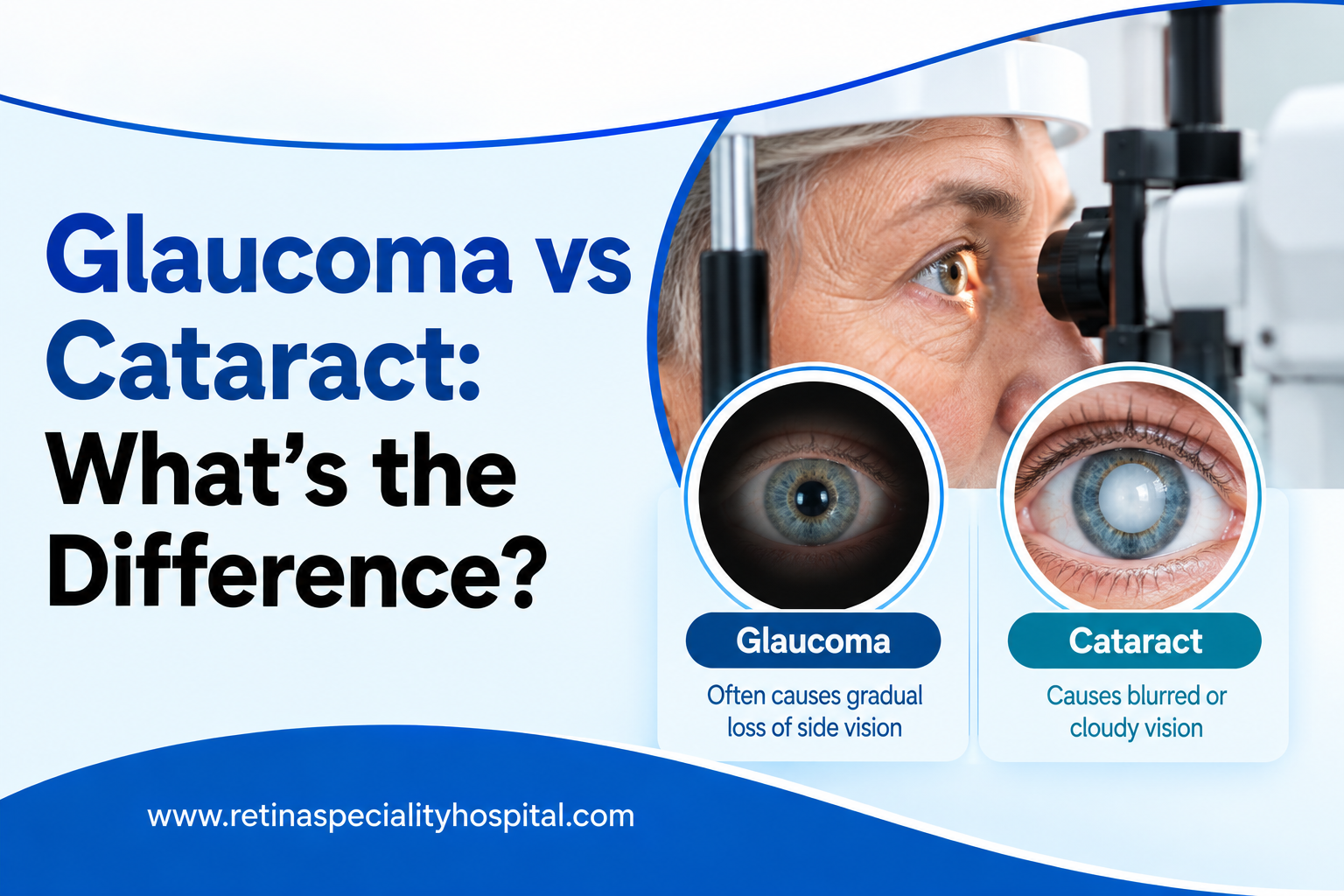
If you are above 40 and have blurred or cloudy vision, a cataract check may be more relevant than LASIK. Your eye specialist will guide you after examination.
How to Ensure Safe Laser Eye Surgery
Use this checklist before you book:
- Get a comprehensive eye check-up. Corneal thickness, topography, dry eye tests and retina examination should all be done.
- Choose the right hospital. Look for modern equipment, sterile operation theatres and experienced surgeons.
- Follow pre-surgery guidelines. Stop wearing contact lenses as advised and share your complete medical history.
- Follow post-surgery care. Use drops as prescribed, avoid rubbing your eyes and attend every follow-up.
Why a Retina Check Matters
A healthy retina is part of a safe laser vision correction. Patients with high myopia are more prone to retinal weak spots, so a dilated retina examination by a retina specialist in Indore is recommended before surgery. At Retina Speciality Hospital, this is part of our evaluation.
How to Find the Best Eye Hospital in Indore for Laser Surgery
Searching for an eye hospital near me in Indore or the best eye hospital in Indore? Compare these points:
- Advanced diagnostic and laser equipment
- Experienced, qualified surgeons and laser doctors near you
- Complete pre- and post-operative care
- Clear guidance and personalised treatment plans
- Genuine patient reviews and outcomes
Why Choose Retina Speciality Hospital, Indore?
Retina Speciality Hospital is a dedicated eye care centre in Indore offering laser vision correction along with comprehensive retina and general eye care.
- Advanced, FDA-approved laser technology
- Experienced and highly trained surgeons
- Comprehensive pre- and post-surgery care
- Personalised treatment plans
- Positive patient reviews and successful outcomes
Whether you are looking for an eye care hospital in Indore for laser treatment, a retina check or a routine eye examination, our team guides you at every step.
FAQs on Laser Eye Surgery Safety
1. Is eye laser treatment safe?
Yes. Eye laser treatment is considered safe for suitable candidates when performed by an experienced surgeon using modern equipment. Over 95% of patients are satisfied with the results. No surgery is completely risk-free, so a proper evaluation is essential.
2. Is laser treatment for eyes safe or not?
Laser treatment for eyes is safe for most properly screened patients. It may not be suitable if you have thin corneas, severe dry eyes, an unstable prescription or certain eye or autoimmune conditions.
3. Is laser surgery safe for the long term?
For most patients, results remain stable for many years. Natural age-related changes like presbyopia or cataracts can still occur later, and enhancement is possible if your prescription changes.
4. Is LASIK surgery safe?
LASIK has over 25 years of clinical use and a high satisfaction rate. Serious complications are rare when the patient is properly screened and aftercare is followed.
5. What are the LASIK surgery side effects?
Common temporary effects include dry eyes, halos, glare and light sensitivity. They usually improve within weeks to months. Rare complications include infection and flap-related problems.
6. What is the LASIK eye surgery cost in India?
LASIK cost varies from patient to patient, depending on the procedure and technology advised after your eye tests. For accurate cost details, please contact Retina Speciality Hospital, Indore.
7. Is laser eye surgery painful?
No. Numbing drops are used, so most patients feel only slight pressure. Mild irritation or dryness may last a few days.
8. At what age can you get laser eye surgery?
Most surgeons recommend 18 to 21 years or older, once the prescription has been stable for at least a year. There is no strict upper age limit, but age-related conditions like cataract may change the recommended treatment.
9. Who is not eligible for laser eye surgery?
People with thin corneas, severe dry eye, unstable prescription, certain corneal diseases or autoimmune disorders may not qualify. Pregnancy also usually requires postponement.
10. How long is recovery after laser eye surgery?
Most patients see better within 24 hours. Full stabilisation takes one to three months. Avoid swimming, eye rubbing and excess screen time during early recovery.
11. Can laser surgery correct astigmatism?
Yes. LASIK and other laser procedures effectively treat mild to moderate astigmatism along with myopia and hyperopia.
12. How do I choose the best eye hospital in Indore for laser surgery?
Look for certified surgeons, advanced diagnostics and reliable patient reviews. Consult a specialist before deciding.
Conclusion
So, is laser eye surgery safe? For the right candidate, treated by an experienced surgeon using modern technology, yes. While no surgery is 100% risk-free, corrective laser eye surgery is one of the safest and most effective elective procedures in modern eye care.
If you want safe, reliable and advanced eye laser treatment in Indore, book a consultation at Retina Speciality Hospital. Our expert team will check your eligibility and recommend the safest option for your eyes.
Call or book your eye check-up today at Retina Speciality Hospital, Indore.