








If you suddenly see a blind spot or a missing patch in your vision, it means part of your visual field is not sending a clear image to your brain. Doctors call this a scotoma. It can appear as a dark, grey, blurred, or empty area, and while some blind spots are harmless, others are an early sign of a serious eye problem.
A new or growing blind spot should never be ignored. It can point to a condition affecting the retina or optic nerve, so getting checked by an eye doctor in Indore is the safest step to protect your sight.
What Does It Mean If You See a Blind Spot in Your Vision?
A blind spot is an area where your vision is missing or reduced while the rest of your sight stays normal. You might notice a patch that is dark, blurry, or simply blank when you look at something.
Everyone has one natural blind spot in each eye, where the optic nerve leaves the retina. Your brain usually fills this in, so you never notice it.
The blind spots that matter are the new ones. When you suddenly see a blind spot that was not there before, it often means the retina, macula, or optic nerve needs attention.
Common Causes of a Blind Spot or Missing Patch
A blind spot in your vision can have many causes, from harmless to serious. Some develop slowly, while others appear within hours.
The table below shows common causes and how urgent they usually are.
| Cause | What Happens | Urgency |
| Migraine aura | A shimmering blind spot that clears in under an hour | Usually harmless |
| Age-related macular degeneration | Central missing patch, distorted lines | See a retina specialist |
| Diabetic retinopathy | Blurred or blank patches from retinal damage | Serious, needs care |
| Retinal detachment | Curtain, shadow, or growing blind spot | Emergency |
| Glaucoma | Gradual loss of side vision | Serious, ongoing care |
| Optic nerve problems | Sudden central blind spot, often with pain | Urgent |
Because these causes look similar to the patient, only an eye exam can tell them apart. Any new blind spot should be checked promptly at a vision care centre for retina care.
When a Blind Spot in Your Vision Is an Emergency

Most blind spots need attention, but some are true emergencies. Acting fast can save your sight.
Seek urgent care if your blind spot comes with:
• A dark curtain or shadow spreading across your vision
• A sudden shower of new floaters or flashes of light
• Rapidly growing or worsening missing patches
• Sudden loss of central or side vision
• Eye pain or a severe headache with the blind spot
If you notice any of these signs, contact an eye doctor in Indore straight away. A retinal detachment or blocked blood vessel can damage sight within hours if it is not treated.
Why the Retina Matters When You See a Blind Spot
The retina is the light-sensitive layer at the back of your eye, and the macula is its centre for sharp, detailed vision. When either is damaged, a blind spot or missing patch often appears.
Conditions like macular degeneration, diabetic retinopathy, and retinal detachment all affect this delicate tissue. Because the retina cannot always repair itself, early treatment is key to preserving vision.
This is why a blind spot linked to the retina should be assessed by a retina specialist doctor, who can find the exact cause and act quickly.
How Blind Spots in Vision Are Diagnosed
Finding the cause of a blind spot is simple and painless. The doctor combines your history with a few focused tests.
Your assessment may include:
- A visual field test that maps exactly where the blind spot is.
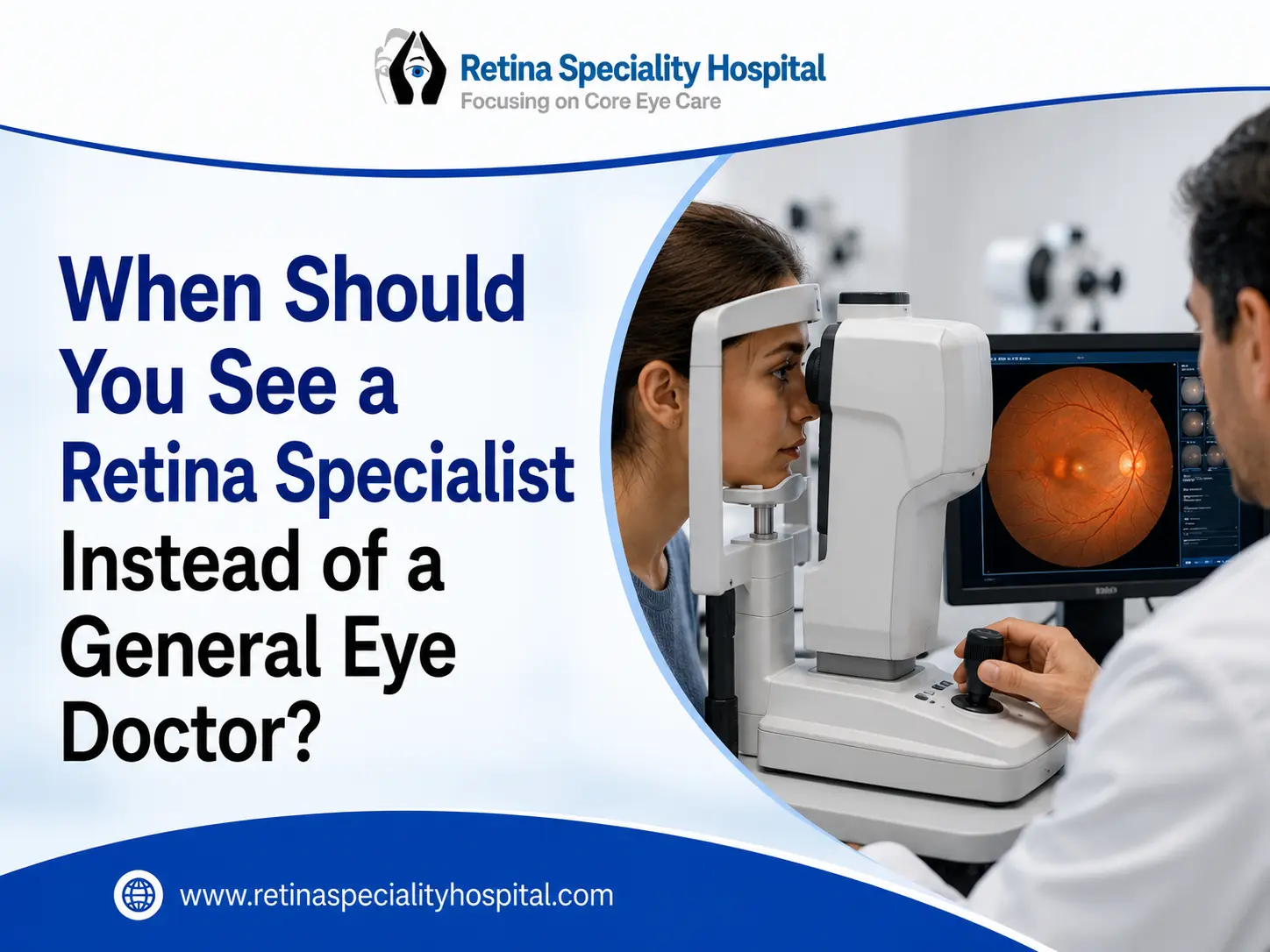
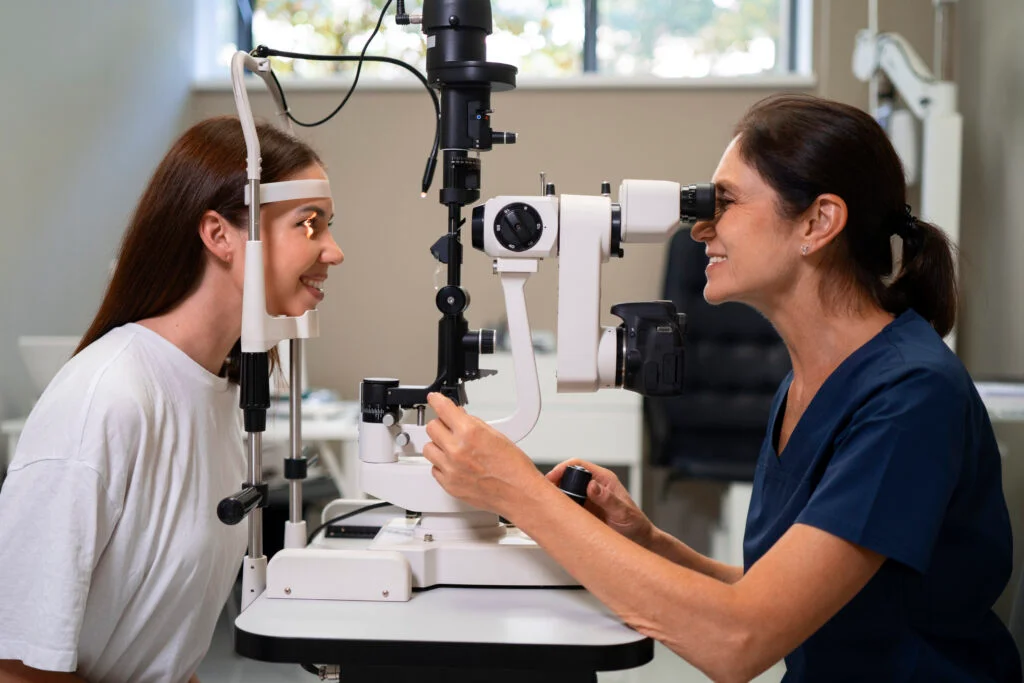
- A dilated retinal exam to view the retina and optic nerve.
- Optical Coherence Tomography (OCT), a detailed scan of the retina and macula. See how OCT imaging works.
- An Amsler grid check, where wavy or missing lines can reveal macular problems.
Treatment Options for a Blind Spot in Vision
Treatment depends entirely on the cause. Once the underlying problem is treated, some blind spots improve, while others can be stopped from getting worse.
Common approaches include:
- Managing the trigger for migraine-related blind spots.
- Injections or laser for diabetic retinopathy and macular degeneration.
- Urgent surgery such as vitrectomy for retinal detachment.
- Eye-pressure control for glaucoma to protect remaining vision.
How to Protect Your Vision and Choose the Right Care
Good habits and regular checks are the best way to catch a blind spot early, often before you even notice symptoms.
Simple steps that help include:
- Have a comprehensive eye exam at least once a year.
- Manage diabetes, blood pressure, and cholesterol carefully.
- Do not ignore floaters, flashes, or new missing patches.
- Protect your eyes from injury and UV light.
- Know your family history of eye disease.
Choosing the right hospital also matters. A NABH hospital in Indore with a focused retina team offers accurate diagnosis and safe, standardised care. If you are searching for an Indore best eye hospital or a top eye hospital in Indore, pick one where an experienced eye doctor in Indore and retina specialists work together to protect your sight.
See a Doctor If You Notice
- A new dark, grey, or blank patch in your vision.
- A blind spot that is growing or spreading.
- Floaters, flashes, or a curtain over your sight.
- Distorted or wavy central vision.
- Any sudden vision loss.
Frequently Asked Questions
1. Is a blind spot in my vision serious?
It can be. A single, stable natural blind spot is normal, but a new, growing, or sudden blind spot may signal a retinal, macular, or optic nerve problem. Conditions like retinal detachment or macular degeneration need prompt care, so any new missing patch should be checked by an eye doctor as soon as possible.
2. Can a blind spot in vision go away?
Sometimes. A blind spot caused by a migraine aura usually clears within an hour on its own. However, blind spots caused by retinal or optic nerve damage may be permanent unless treated early. This is why fast diagnosis matters, as some causes can be stopped from getting worse or partly reversed.
3. What causes a sudden blind spot in one eye?
A sudden blind spot in one eye can be caused by a retinal detachment, a blocked retinal blood vessel, optic nerve inflammation, or bleeding inside the eye. These are usually serious and need urgent attention. If you suddenly see a blind spot in one eye, treat it as an emergency and see a retina specialist right away.
Don’t Ignore a Blind Spot. Protect Your Sight Today
A blind spot or missing patch is your eye’s way of warning you that something needs attention. With the right diagnosis and timely treatment, many causes can be managed and your vision protected.
If you see a blind spot in your vision, especially a new or growing one, do not wait. The retina specialists at Retina Speciality Hospital, Indore offer thorough eye checks and advanced treatment to find the cause and safeguard your sight. Call 0731-2553377 or book your eye examination today. Meet our retina specialists to get started.