







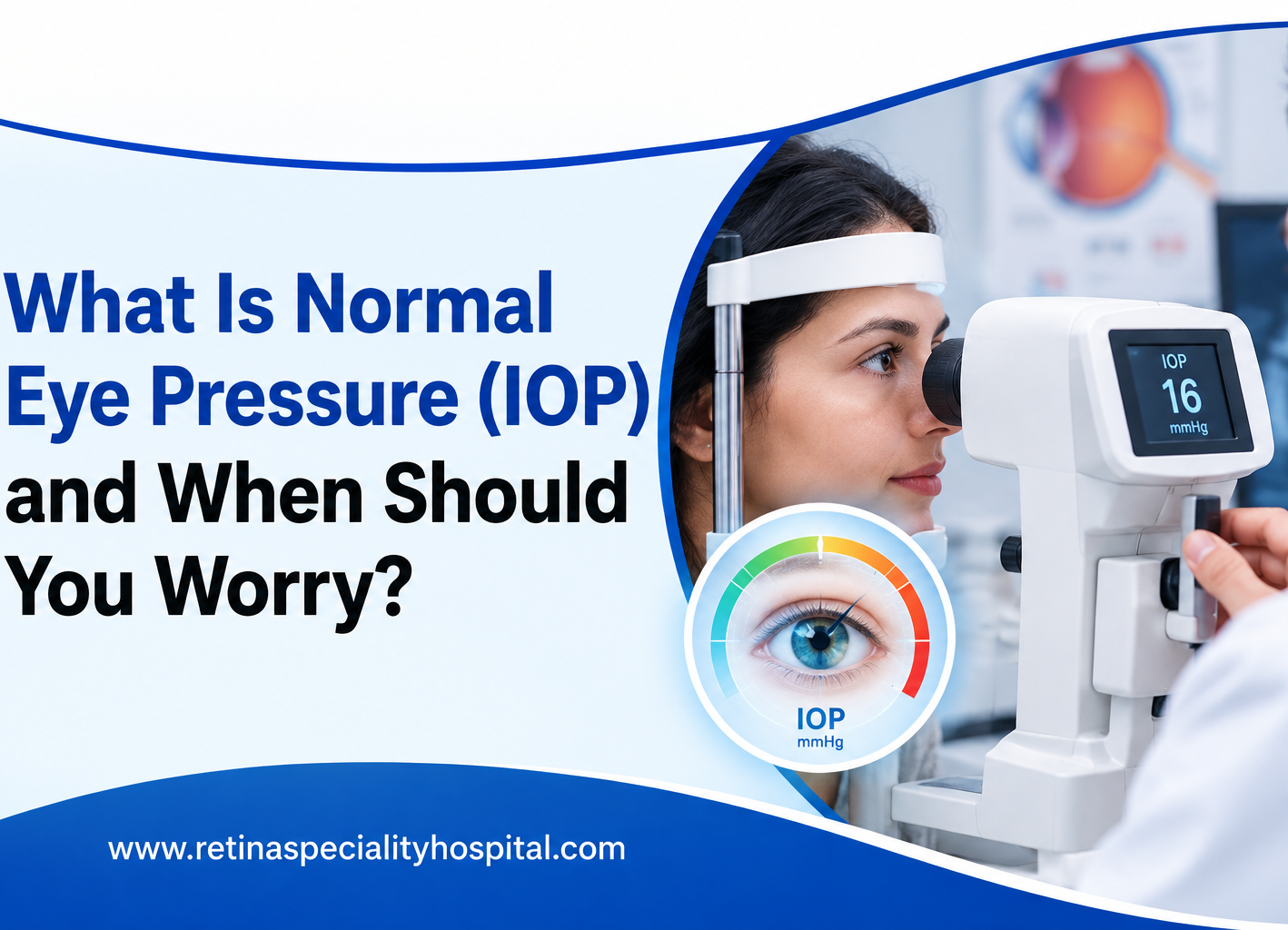
Normal eye pressure, medically called intraocular pressure or IOP, usually falls between 10 and 21 mmHg. Pressure above this range, especially consistently above 21 mmHg, raises your risk of glaucoma and optic nerve damage. However, eye pressure alone doesn’t tell the whole story. Some people develop glaucoma at normal pressure, while others live for years with slightly elevated pressure and no damage at all.
At Retina Speciality Hospital, a trusted eye hospital in Indore, our team frequently explains this exact confusion to patients. This guide breaks down what IOP means, what counts as normal eye pressure in Indore, and when a reading should prompt a visit to a specialist.
What Is Intraocular Pressure (IOP)?
Your eye is filled with a clear fluid called aqueous humor. This fluid is constantly produced and drained to maintain the eye’s shape and nourish its internal structures. Intraocular pressure is simply the pressure this fluid creates inside the eye.
When drainage slows down or too much fluid is produced, pressure builds up. Over time, this pressure can push against the optic nerve at the back of the eye and damage the nerve fibers responsible for vision. This is the underlying mechanism behind most cases of glaucoma.
What Is Considered Normal Eye Pressure?
According to the American Academy of Ophthalmology, typical eye pressure ranges from 10 to 20 mmHg, with most clinical sources placing the upper limit at 21 mmHg.Pressure is measured in millimeters of mercury (mmHg) using an instrument called a tonometer.
| IOP Reading | Category | What It Usually Means |
| 10 to 21 mmHg | Normal range | Typical, low glaucoma risk |
| Above 21 mmHg, no optic nerve damage | Ocular hypertension | Elevated risk, needs monitoring |
| Above 21 mmHg, with optic nerve damage | Glaucoma | Active disease, needs treatment |
| Below 10 mmHg | Low eye pressure (hypotony) | Can also affect vision, needs evaluation |
It’s worth noting that eye pressure naturally fluctuates through the day, and a single reading doesn’t always tell the complete picture. This is one reason doctors sometimes recommend multiple readings at different times before confirming a diagnosis.
When Should You Worry About Eye Pressure?
Not every high reading means glaucoma, and not every case of glaucoma shows high pressure. Still, certain situations call for prompt attention from a glaucoma specialist in Indore:
- Your IOP reading is consistently above 21 mmHg on more than one visit
- You have a family history of glaucoma along with elevated pressure
- You’ve been told you have “ocular hypertension” but haven’t followed up
- You notice gradual peripheral vision loss along with pressure changes
- You experience sudden eye pain, redness, blurred vision, or halos around lights (this may indicate an acute angle-closure attack and needs emergency care)
Ocular Hypertension vs Glaucoma: What’s the Difference?
This is one of the most common points of confusion for patients.
- Ocular hypertension means your eye pressure is higher than the typical range, but your optic nerve shows no visible damage and your vision is unaffected. You’re considered a “glaucoma suspect” and need regular monitoring.
- Glaucoma means the elevated pressure (or, in some cases, normal pressure) has already caused measurable damage to the optic nerve, often visible through an OCT scan or visual field test.
Both situations require follow-up, but the treatment approach differs. Ocular hypertension may only need monitoring, while glaucoma usually requires active treatment to prevent further damage.
Why Does Eye Pressure Vary Between People?
Eye pressure isn’t just about glaucoma risk in isolation. A few factors affect how a given IOP reading should be interpreted:
- Corneal thickness – thinner corneas can make actual eye pressure appear lower than it truly is, and vice versa
- Time of day – IOP tends to peak in early morning hours for many people
- Age and ethnicity – some populations show naturally lower average IOP without added risk
- Medications – long-term steroid use can raise eye pressure significantly
This is exactly why a proper glaucoma test in Indore near me should include more than a single pressure reading. Corneal thickness measurement (pachymetry) and optic nerve imaging give a far more complete picture.
How Is Eye Pressure Measured?
At a comprehensive eye hospital in Indore, IOP is typically checked using one or more of these methods:
- Applanation tonometry – the gold standard, using a numbing drop and a small probe at the slit lamp
- Non-contact tonometry – the familiar “air puff” test used for quick screening
- Pachymetry – measures corneal thickness to help interpret the pressure reading accurately
- 24-hour or diurnal IOP monitoring – used in select cases to track pressure fluctuation through the day
Who Should Get Regular IOP and Glaucoma Screening?
You should schedule a glaucoma screening in Indore at least once a year if you:
- Are above 40 years of age
- Have a family history of glaucoma
- Have diabetes, hypertension, or high myopia
- Use steroid medications long term
- Have previously been told you have borderline or high eye pressure
Key Takeaways
- Normal eye pressure typically ranges from 10 to 21 mmHg
- Pressure above 21 mmHg is called ocular hypertension and raises glaucoma risk
- Some people develop glaucoma at normal pressure, so pressure alone isn’t the full diagnosis
- Corneal thickness, time of day, and medication use can all affect your IOP reading
- Annual screening after age 40, or earlier with risk factors, is the safest approach
FAQs related to Normal Eye Pressure (IOP)
1. Is 22 mmHg eye pressure dangerous?
A reading of 22 mmHg is slightly above the typical range and is generally classified as ocular hypertension. It isn’t automatically dangerous, but it does mean you should have your optic nerve and visual field evaluated to rule out early glaucoma.
2. Can eye pressure be normal but still have glaucoma?
Yes. This condition is called normal-tension glaucoma, where optic nerve damage occurs even though IOP stays within the typical range. It’s one reason eye pressure alone should never be used as the sole test for glaucoma.
3. How often should I get my eye pressure checked?
If you’re under 40 with no risk factors, every two to three years is generally sufficient. After 40, or if you have risk factors like diabetes or a family history of glaucoma, annual checks are recommended.
4. Does high eye pressure always cause symptoms?
No. Most people with elevated eye pressure feel completely normal and notice no symptoms at all. This is exactly why routine screening, rather than waiting for symptoms, is so important.
5. Can eye pressure be lowered without surgery?
Yes, in most cases. Prescription eye drops are usually the first line of treatment and can effectively lower IOP. Laser treatment or surgery is generally considered only if drops aren’t controlling the pressure adequately.
Not sure what your eye pressure reading actually means for you? Book an accurate IOP and glaucoma test in Indore at Retina Speciality Hospital. Our glaucoma specialists combine pressure measurement with OCT and visual field testing to give you a complete, reliable answer, not just a number.