








Scleral buckling is a surgery used to fix retinal detachment, a serious eye problem in which the retina pulls away from the tissue beneath it. The surgeon puts a small silicone or sponge band around the outer wall of the eye (sclera) which gently pushes the wall inward to touch the detached retina. This indentation releases the force of the pull that causes the detachment and allows the retina to reattach naturally.
This surgery is done under local or general anaesthesia, and is often done in conjunction with cryotherapy or laser treatment to seal any retinal tears. Recovery usually takes a couple of weeks and patients may feel some mild discomfort, redness or temporary changes in vision.It remains one of the best long-term solutions, especially for younger patients and patients with uncomplicated retinal detachments. If you live in central India and are suffering from this problem, you can get Scleral Buckling Treatment in Indore from experienced specialists with modern surgical facilities and qualified vitreoretinal surgeons. Early diagnosis and timely treatment can significantly improve the prognosis of recovering clear vision and preventing permanent vision loss.
What Is Retinal Detachment?
Understanding the Condition
Retinal detachment occurs when the retina, a thin layer at the back of your eye responsible for vision, pulls away from its normal position. This can lead to permanent vision loss if not treated promptly. Symptoms include floaters, flashes of light, or a shadow across your vision.
- Why it matters: Early detection and treatment are critical to preserving vision.
- Who’s at risk: Those with high myopia, eye injuries, or a family history of retinal issues.
If you’re experiencing these symptoms, an eye specialist near me can diagnose the condition and recommend appropriate retina treatment in Indore.
What Is Scleral Buckling?
A Proven Surgical Solution
Scleral buckling is a surgical procedure performed by a retinal surgeon in Indore to repair a detached retina. It involves placing a silicone band (buckle) around the sclera, the white part of the eye, to gently push the retina back into place. This allows the retina to reattach and heal properly.
- How it works: The buckle indents the eye’s surface, closing the retinal tear and preventing further detachment.
- When it’s used: Often recommended for specific types of retinal detachment, especially in younger patients or those with certain tear patterns.
This procedure is a cornerstone of eye surgery in Indore, offering a high success rate for restoring vision.
How Does Scleral Buckling Treat Retinal Detachment?
The Procedure Explained
The scleral buckling procedure is typically performed under local or general anesthesia. Here’s a step-by-step overview:
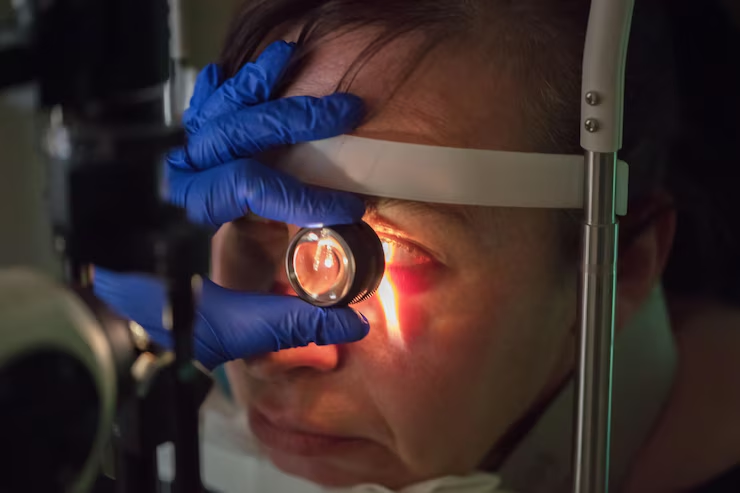
- Preparation: Your retinal specialist in Indore will conduct a thorough eye exam, possibly using imaging to assess the detachment.
- Surgery: The surgeon places the silicone buckle around the eye and may drain fluid from under the retina. In some cases, a gas bubble is injected to help the retina stay in place.
- Recovery: Post-surgery, patients may need to maintain a specific head position to keep the retina in place while it heals.
- Real-world application: A patient with sudden vision loss due to a retinal tear can regain clear vision after this procedure when performed by a skilled retinal surgeon in Indore.
- Pro tip: Follow your surgeon’s post-op instructions carefully to ensure optimal healing.
For more details on the procedure, check out our guide to retina treatment in Indore or consult resources from trusted organizations like the American Academy of Ophthalmology.
Benefits of Scleral Buckling
Why Choose This Treatment?
Scleral buckling is a trusted option for retinal detachment surgery in Indore due to its effectiveness and long-term results. Key benefits include:
- High success rate: Most patients experience significant vision improvement.
- Minimally invasive: The procedure doesn’t require removing the retina, reducing risks.
- Long-lasting results: The buckle often remains in place permanently without discomfort.
This treatment is particularly effective when performed by an experienced eye specialist near me, ensuring personalized care and follow-up.
Recovery and Aftercare
What to Expect Post-Surgery
Recovery from scleral buckling typically takes a few weeks, with full vision restoration taking longer. Here’s what you need to know:
- Rest and positioning: You may need to keep your head in a specific position for a few days to aid healing.
- Follow-up visits: Regular checkups with your retinal specialist in Indore ensure the retina is healing correctly.
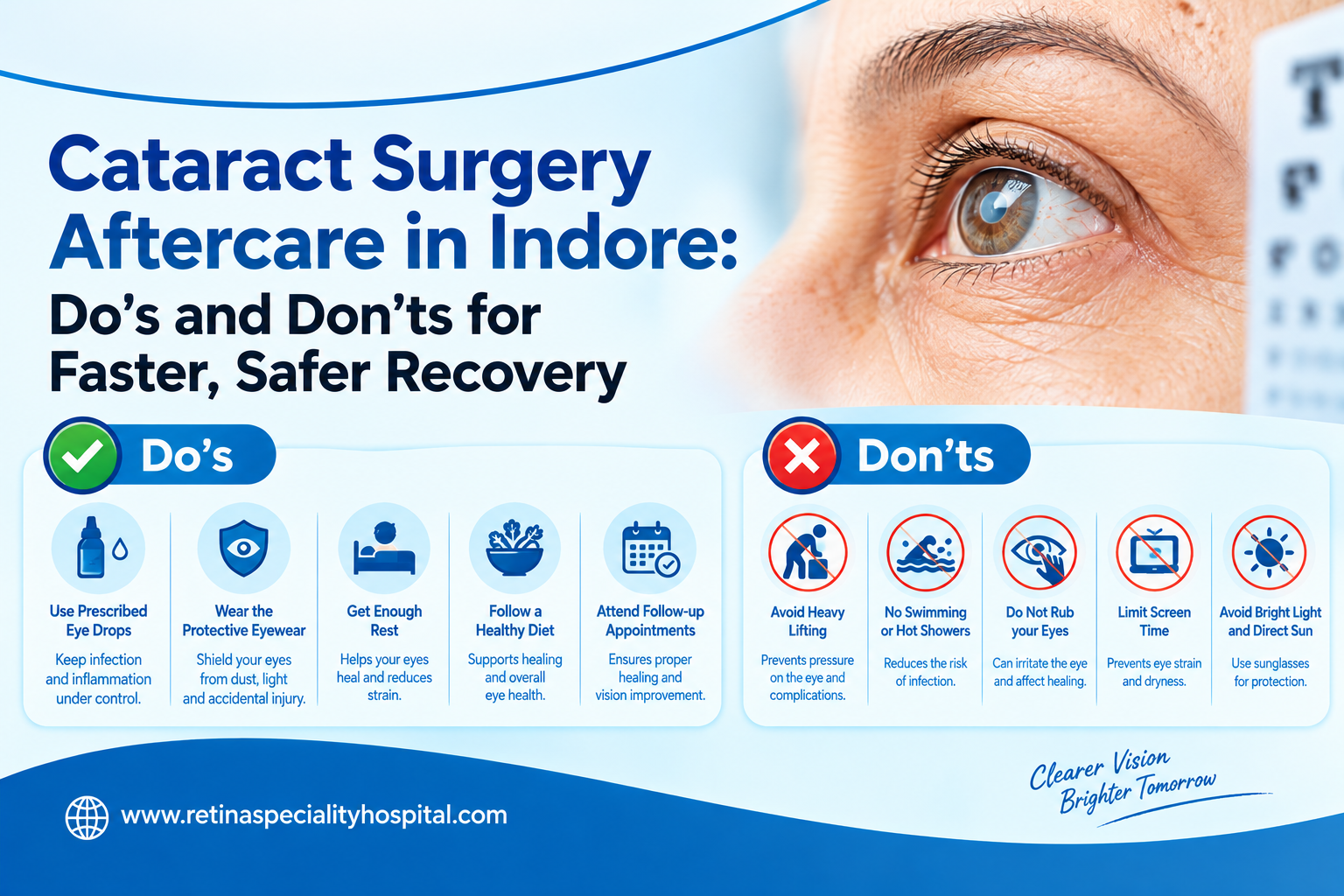
- Activity restrictions: Avoid strenuous activities or heavy lifting for a few weeks.
For a smooth recovery, follow your doctor’s advice and attend all follow-up appointments at a trusted eye surgery in Indore clinic.
FAQs About Scleral Buckling
1. What is scleral buckling surgery?
Scleral buckling is a surgical procedure where a silicone band is placed around the eye to push the sclera inward, helping the detached retina reattach to the underlying tissue and restore normal eye function.
2. How long does scleral buckling surgery take?
The procedure typically takes between one to two hours depending on the complexity of the detachment. It is usually performed on an outpatient basis, meaning patients can return home the same day after recovery monitoring.
3. Is scleral buckling painful?
The surgery itself is painless due to anesthesia. Post-operatively, patients may experience mild discomfort, soreness, or pressure around the eye, which is manageable with prescribed pain relievers and usually subsides within a few days.
4. What is the success rate of scleral buckling?
Scleral buckling has a success rate of approximately 80 to 90 percent for initial reattachment. Some patients may require a second procedure. Long-term outcomes are generally favorable, especially when surgery is performed promptly after detachment.
5. How long is recovery after scleral buckling?
Recovery typically takes four to six weeks. Patients are advised to avoid strenuous activities, heavy lifting, and swimming during this period. Vision gradually improves, though complete stabilization may take several months.
6. Can scleral buckling restore full vision?
Vision recovery depends on whether the macula was involved in the detachment. If treated before macular involvement, full vision restoration is more likely. Delayed treatment may result in partial vision recovery even after successful reattachment.
7. What are the risks of scleral buckling surgery?
Potential risks include infection, bleeding, double vision, increased eye pressure, cataract development, and in rare cases, failure of retinal reattachment. Discussing these risks thoroughly with your retinal surgeon before the procedure is strongly recommended.
8. Is scleral buckling better than vitrectomy?
Both procedures treat retinal detachment effectively. Scleral buckling is often preferred for younger patients and simpler detachments, while vitrectomy suits complex cases. Surgeons may also combine both techniques for optimal results depending on individual conditions.
9. Who is a good candidate for scleral buckling?
Ideal candidates include younger patients with clear lenses, those with peripheral retinal tears, and uncomplicated retinal detachments without significant vitreous involvement. A retinal specialist evaluates each case individually to recommend the most appropriate surgical approach.
10. How soon should retinal detachment be treated?
Retinal detachment is a medical emergency requiring treatment within 24 to 72 hours, especially if the macula is not yet involved. Delayed surgery significantly increases the risk of permanent vision loss, making early diagnosis critically important.
Conclusion
Scleral buckling is a highly effective procedure for treating retinal detachment, offering hope for restoring vision and preventing further damage. By choosing a skilled retinal specialist in Indore, you can ensure the best possible outcome for your retina treatment in Indore. If you’re experiencing symptoms of retinal detachment or want to learn more about eye surgery in Indore, don’t wait—contact a trusted eye specialist near me today. Have questions or experiences to share? Leave a comment below, and let’s continue the conversation!
Schedule a consultation with a retinal surgeon in Indore to discuss your options for retinal detachment surgery in Indore. Visit our retina treatment page for more resources or subscribe to our newsletter for the latest eye health tips!